If you need a freelance travel writer or you would like to see your country, city, flight, etc., presented on the blog, drop me an email.
Find our more on Freelance Travel Writer page.

If you are wondering about the best things to do in Kraljevo, you will certainly start your visit in the city centre, but make sure you leave enough time for the surrounding area, because one beautiful place follows another. There are few cities in Serbia where you can literally walk through the centuries – from carefully planned streets and 19th-century town houses, through traces of more recent history, to medieval monasteries and fortresses in the immediate vicinity. Kraljevo is a city inextricably linked with Serbian kings, the Nemanjić dynasty and the creation of the medieval Serbian state. Here you will find Žiča – the place where the first Serbian king was crowned, Maglič Fortress – dramatically rising above the Ibar, and Studenica – one of Serbia’s most important sacred sites. And running through it all is the Ibar, where you can take a walk, stop for a coffee or simply enjoy the view.
FROM BELGRADE: 167 km
FROM NIŠ: 146 km
Still, I would not set aside just a few hours for Kraljevo. The city and its surroundings deserve at least two days, especially if you want to visit Žiča, Maglič and Studenica without turning your sightseeing into a race from one attraction to the next. In the city itself, everything is close enough for a pleasant walk, while just a few kilometres away the landscape changes and opens towards the mountains, rivers and medieval monuments. It is precisely this combination of city life and an exceptionally rich historical heritage that makes Kraljevo an interesting place to visit.
View this post on Instagram
Kraljevo
The history of Kraljevo is much older than its present name. The area around the city was inhabited in earlier periods, but it gained particular importance in the Middle Ages, when Studenica, Žiča and Maglič were built nearby. At the beginning of the 13th century, Žiča became the seat of the independent Serbian Church, and it was here that Stefan the First-Crowned was crowned the first Serbian king in 1217.
Modern-day Kraljevo developed from the settlement of Karanovac and received its present name in 1882, when King Milan Obrenović accepted the residents’ request to rename the town. Its distinctive circular main square and regularly intersecting streets were laid out during the 19th century, creating an urban design that still gives the centre its special character. According to a well-known legend, Prince Miloš Obrenović drew the plan for the future centre in sand in an ordinary baking pan, and his architect Laza Zuban then put it into practice in 1832.
Kraljevo lies at the confluence of the Ibar and West Morava rivers and is something of a gateway to the mountains and monasteries of central Serbia. Its coat of arms, featuring seven crowns, recalls the seven medieval coronations at nearby Žiča, while the city’s name itself still carries a clear connection with the past of Serbian kings.
During 2026, I travelled around Serbia as part of the process of updating a British travel guide to Serbia published by Bradt Guides. Kraljevo was particularly interesting to me because I wanted to spend enough time here not only because of the sights in the city itself, but also because of its exceptional historical surroundings. And when you receive such a warm welcome from the Kraljevo Tourist Organisation, you know you are going to remember a trip like this.
During my stay, I had the opportunity to walk around the city, visit its most important locations and once again realise how interesting it is when your work requires you to actually stop, look around and experience the places you visit. Kraljevo is exactly that kind of city – the more you walk, the more you begin to connect what you see today with the stories that unfolded here centuries ago.
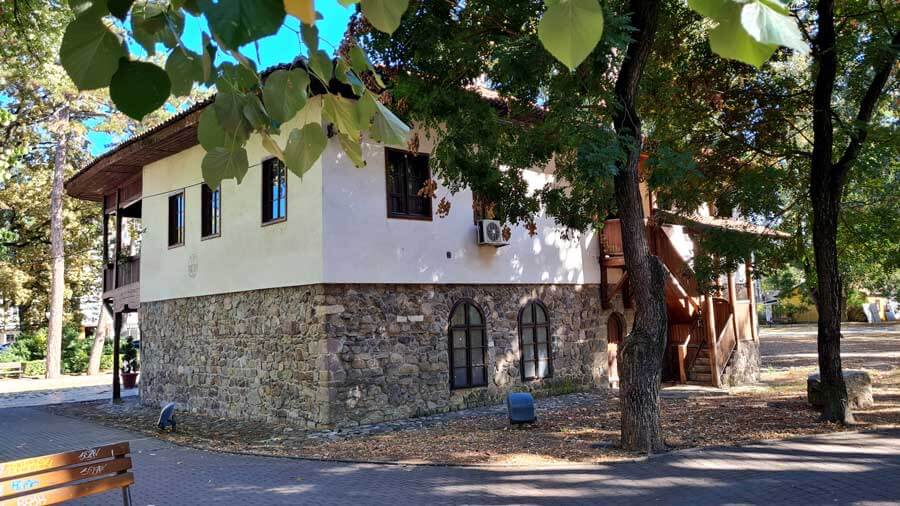
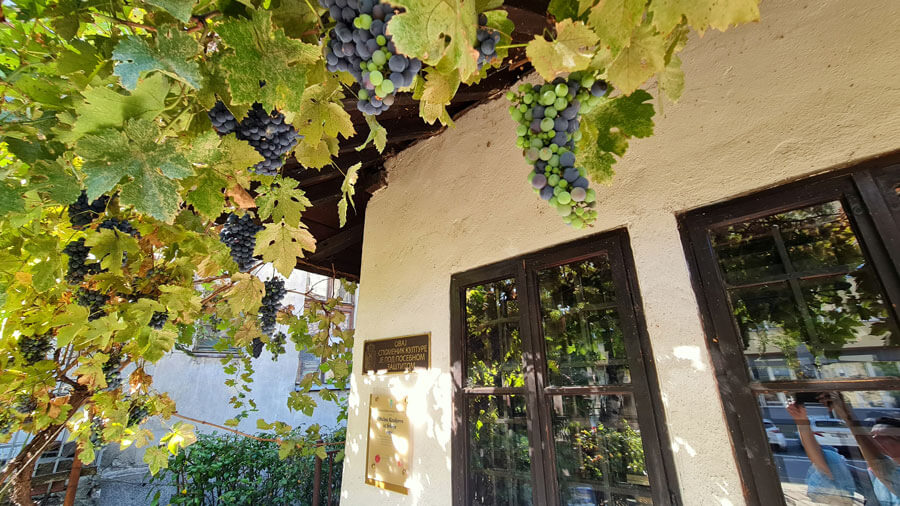
Gospodar Vasin Konak is one of the oldest surviving buildings in Kraljevo and a valuable example of 19th-century town architecture. It was built in 1831 for Vasa Popović, the knez of the Požega District and brother of Princess Ljubica, and belongs to the type of house characteristic of the time of Prince Miloš Obrenović. Over the years, the building changed its purpose, having served at various times as a prison, military museum and, until the end of the 20th century, one of the main premises of the National Museum of Kraljevo. Today, it houses the Orthodox Spiritual Centre “Bishop Nikolaj Velimirović”.
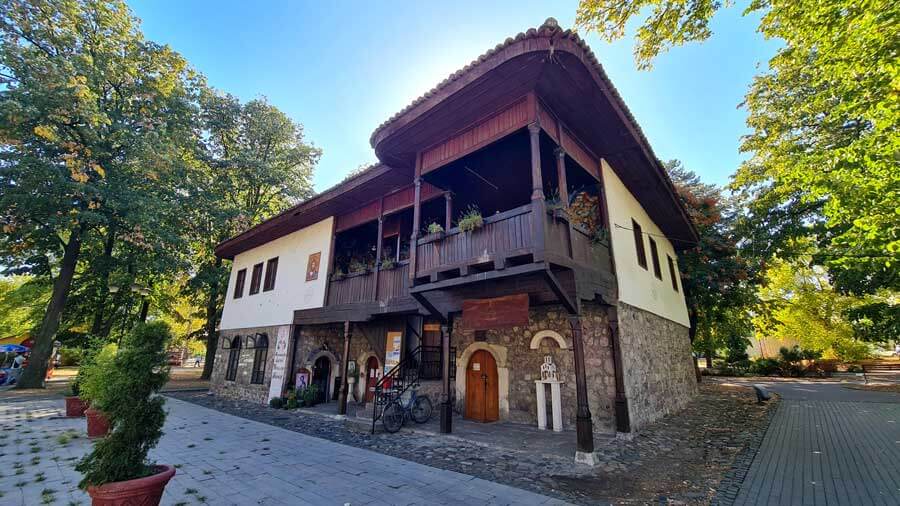
When I first saw it during my visit to Kraljevo, it immediately reminded me of Kragujevac and the remains of Miloš Obrenović’s court there, as well as the Old Church. Here, too, I had that interesting feeling that, in the middle of a modern city, a small, preserved piece of Kraljevo suddenly appears from the time when Serbia was only beginning to take on the outlines of a modern state. The simple house, with its broad roof and doksat, does not have the monumentality of later representative buildings, but that is precisely what makes it feel intimate and authentic. I particularly liked the fact that it stands in the green space of the park, so you do not approach it as an isolated museum attraction, but as part of the old urban setting. If you want to understand what Karanovac looked like in the first decades of the 19th century, this konak is one of the places you should not skip.
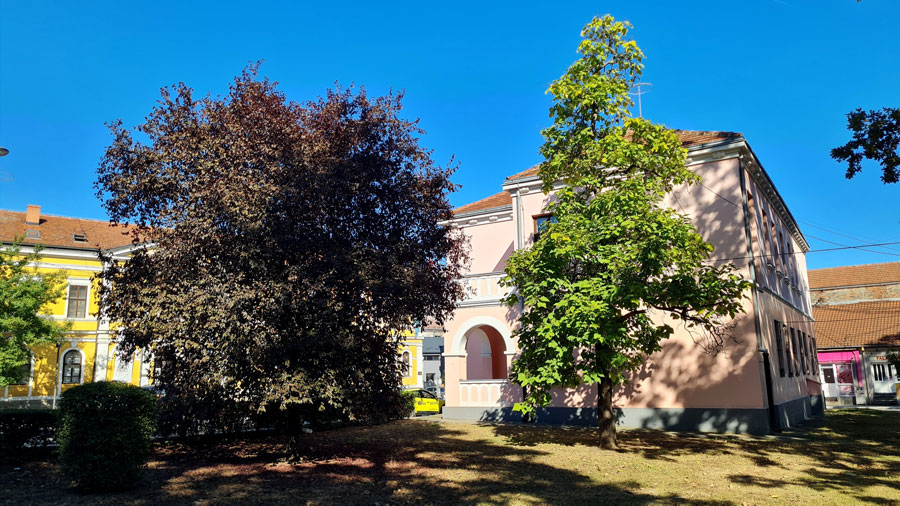
The National Museum of Kraljevo was founded in 1950, but its present building has a much longer history. It is a former school building erected in 1873 on what is now Trg Svetog Save, which was later adapted into a representative museum space. Today, the museum houses archaeological, historical, ethnological and art collections that allow the history of Kraljevo and its surroundings to be followed from prehistoric times to the present day. A special place in the permanent exhibition is given to the history of the city, its development during the 19th and 20th centuries, and its connections with the Obrenović and Karađorđević dynasties. One part of the exhibition is also devoted to the suffering of the people of Kraljevo during the Second World War, including the mass execution of October 1941.
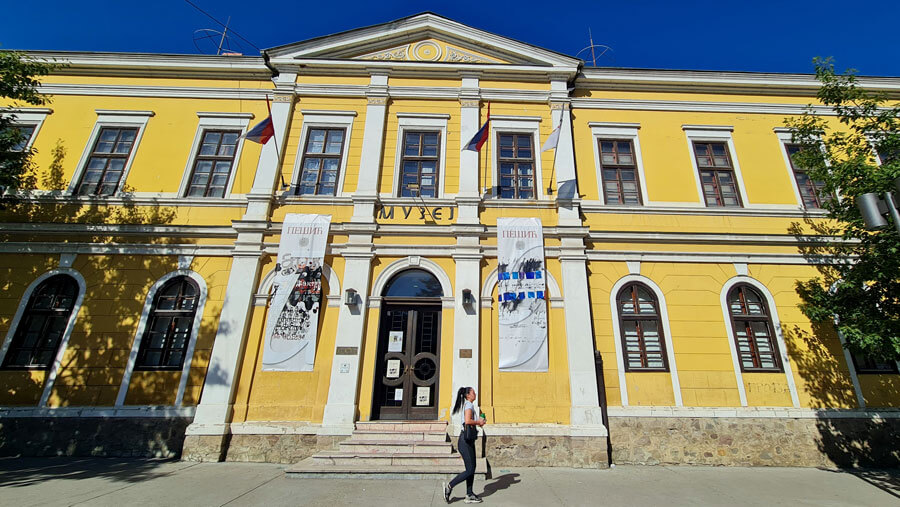
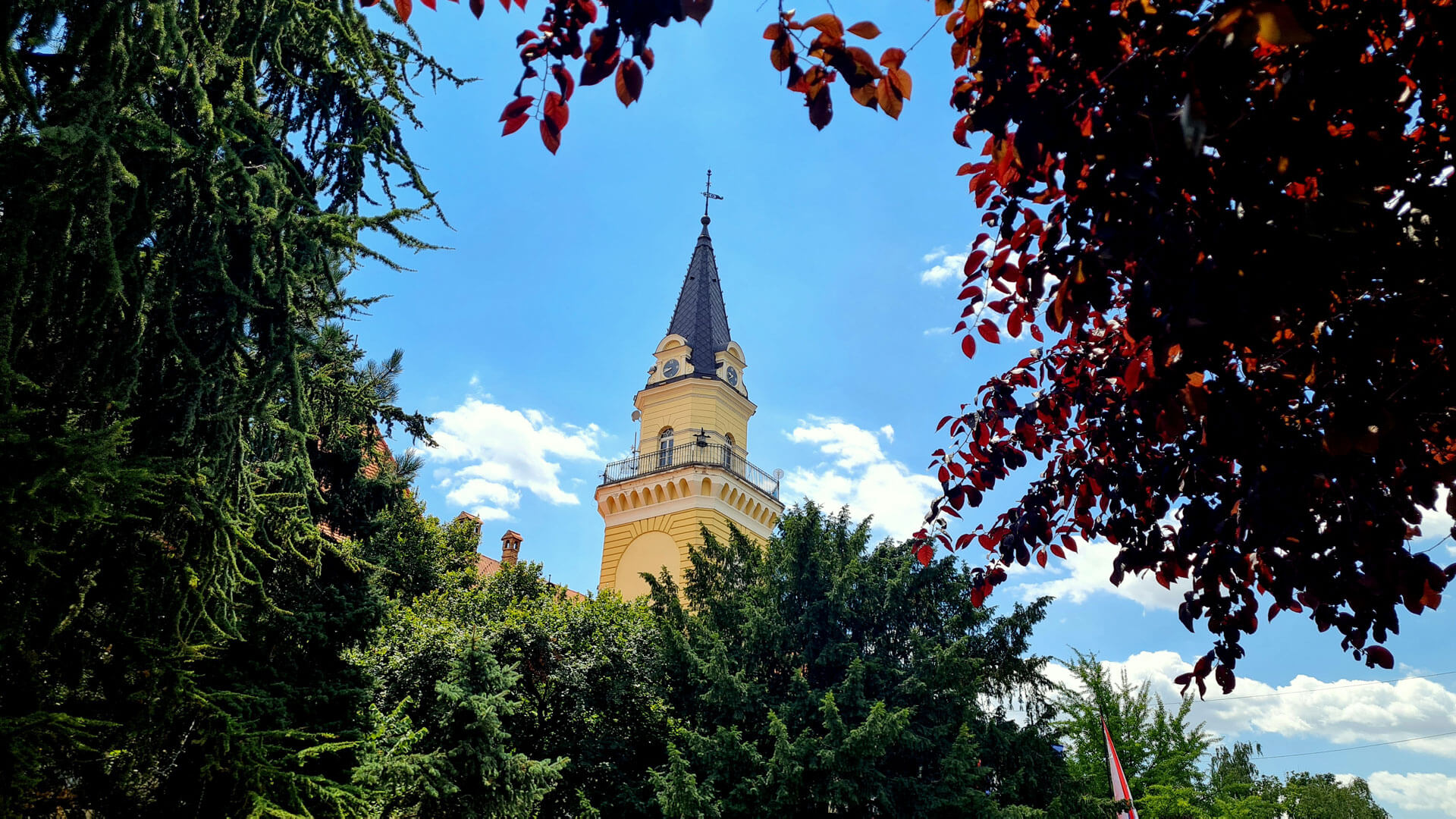
Photographs of old Kraljevo, objects from everyday life and documents offer a good impression of how much the city has changed in a relatively short period. It is particularly interesting to follow how former Karanovac developed into an administrative, commercial and cultural centre. A visit to the museum is not only an opportunity to see its collection, but also a good way to connect what you will later see in the streets with the history behind it. Simply standing in front of the elegant museum façade, with the bell tower of the Church of the Holy Trinity rising behind it and Gospodar Vasin Konak visible through the trees across the park, you cannot help feeling that this is not just another tourist attraction, but a place that preserves the energy of some significant times gone by.
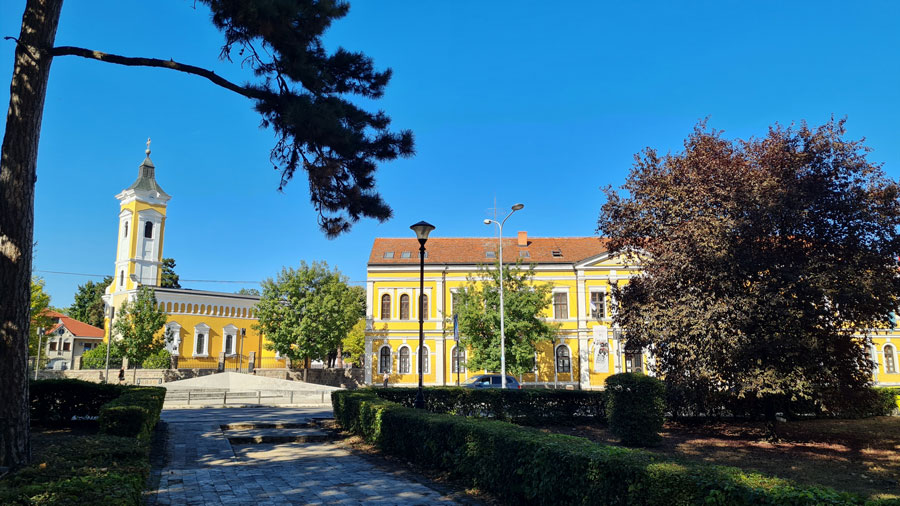
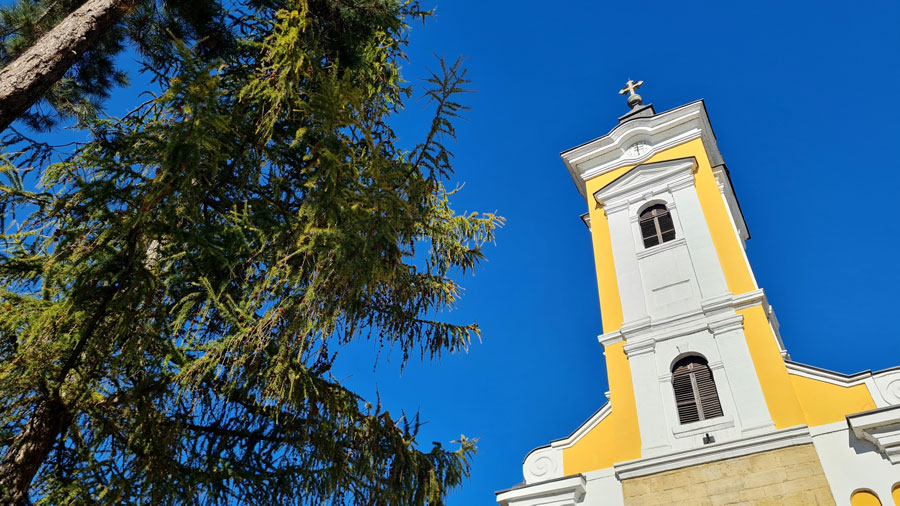
The Church of the Holy Trinity is the oldest surviving sacred building in Kraljevo itself and one of the key monuments of the city’s early development. It was built in 1824 on the orders of Prince Miloš Obrenović, on the site of an earlier wooden church, and was the first building in what was then Karanovac to be constructed of solid materials. It was built by craftsmen from Macedonia, Janja Mihajlović and Nikola Đorđević, and its construction marked the beginning of the formation of an important urban area around the church. Later, the church gained even greater importance when the seat of the Žiča Eparchy was moved to Kraljevo.
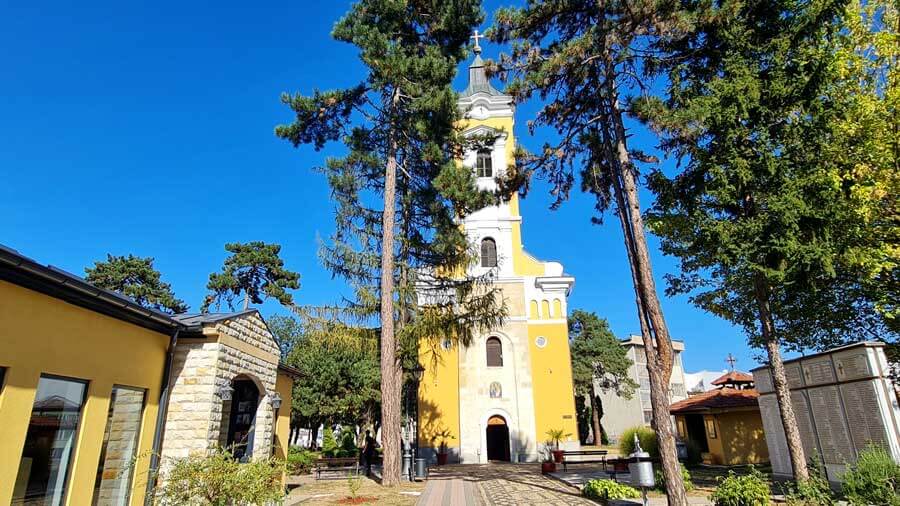
When I arrived at the church, I was reminded once again of Kragujevac, because the Old Church there was also built by Prince Miloš. These buildings are neither large nor lavish like later representative structures, but their very simplicity evokes the period when Serbia was creating its first modern urban centres. Today, the Church of the Holy Trinity is surrounded by a lively urban space, so it is easy to walk past it without remembering how long it has stood in the same place. For me, that combination of everyday life and deep historical layers was one of the more beautiful details of walking through Kraljevo. If you stop for a moment in the churchyard and look at the surrounding buildings and streets, it becomes easier to understand why this part of the city holds such an important place in its history.
The heart of Kraljevo is its unusual circular Trg srpskih ratnika, from which streets extend in a regular grid at right angles. This urban layout was created according to a plan by Laza Zuban in 1832 and remains one of the city’s most recognisable features. In the centre of the square stands the Monument to the Serbian Soldiers who died in the wars from 1912 to 1918, known among locals as “Milutin”. The monument was created by Russian architect and artist Roman Verhovsky and was placed in the square in the early 1930s. Interestingly, it has not always stood here: in the 1960s it was moved to the military cemetery, before being returned to the central square four decades later.
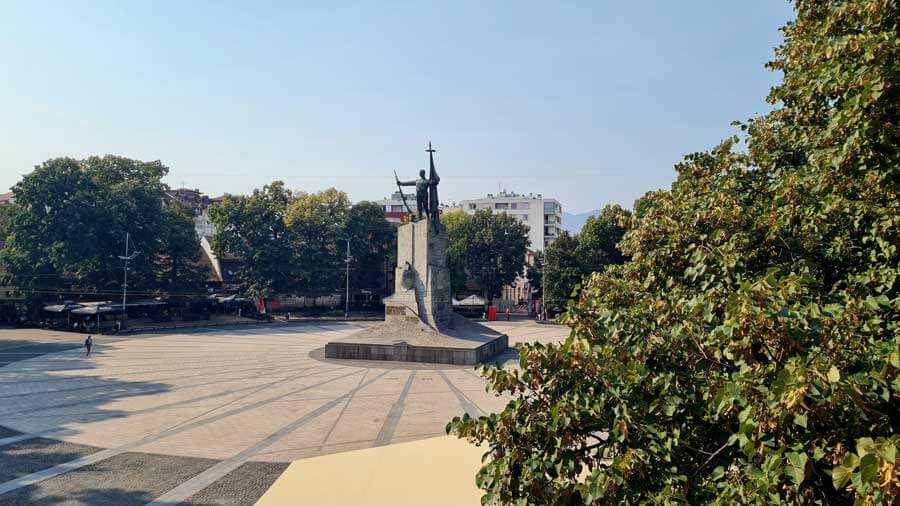
The circular shape of the square is impossible not to notice, as it creates a completely different sense of movement through the city than a traditional rectangular square. The monument itself is impossible to miss, as everyday life in Kraljevo unfolds around it – people pass by, meet, sit in cafés, while children run around the monument. This combination of a memorial and a lively urban space makes the square particularly interesting to visit. I did not experience it simply as a place where you should photograph “Milutin”, but as a space that best reflects the character of Kraljevo. (It is also worth mentioning if you are staying at the Turist Hotel, which stands right on the square.)
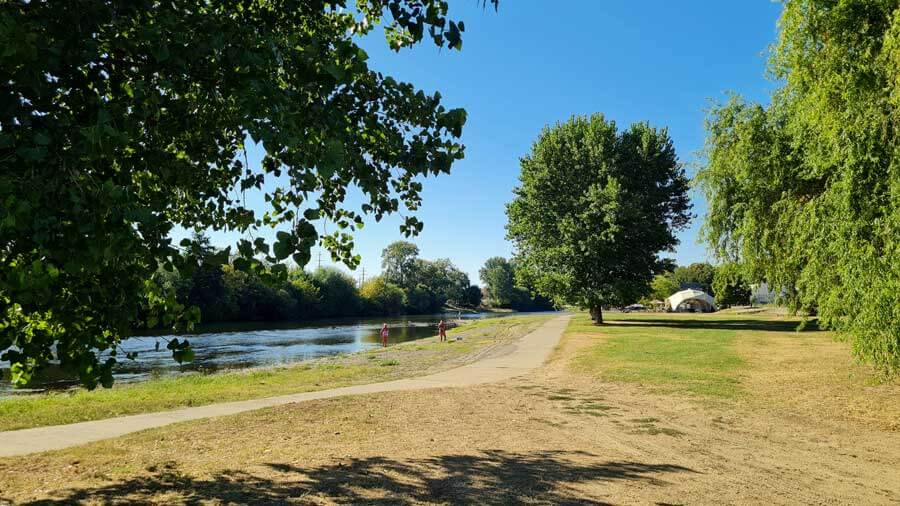
The Ibar riverside offers a completely different experience of Kraljevo from its historic centre. The city lies at the confluence of the Ibar and West Morava, and the river has always been one of the important elements of its location and life. Today, a landscaped riverside promenade follows the Ibar, taking you away from the bustle of the city towards quieter areas along the river. In places, you will find cafés and floating venues, while the riverbank offers views of the water and the greenery surrounding the city.
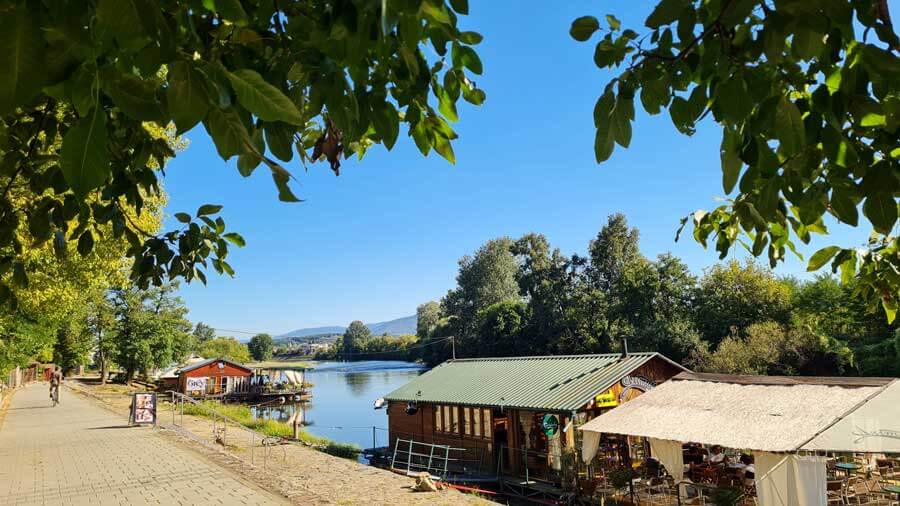
After visiting the museum, church and central square, I enjoyed simply walking down towards the river and continuing on foot. Here, the city suddenly becomes quieter, and the historical stories I had been hearing that day give way to the water, trees and everyday life of Kraljevo’s residents. In summer, the Ibar takes on another role, with activities such as boating, kayaking and canoeing, as well as the famous Veseli Spust, when participants travel down the river from Maglič to Kraljevo. People swim, fish and enjoy the sports facilities among the greenery. For me, however, the simple walk along the river was what I enjoyed most, especially as it was a little cooler there than in the city centre. If you want to take a break between sightseeing stops, the riverside is an ideal place to slow down and discover this more relaxed side of Kraljevo. It takes just a few minutes on foot from the centre to enjoy the easy-going atmosphere and have a coffee by the Ibar.
Žiča Monastery
Just a few kilometres from Kraljevo lies one of Serbia’s most important medieval monasteries – Žiča, the endowment of King Stefan the First-Crowned and his brother, Saint Sava. Construction of the monastery began at the beginning of the 13th century, and in 1219 Žiča became the first seat of the independent Serbian Archbishopric. It was here that Saint Sava crowned his brother Stefan as the first Serbian king, and according to tradition, a total of seven Serbian kings were crowned at Žiča, which is why it is also known as the “seven-doored” monastery.
The Church of the Ascension was originally painted with frescoes in the 13th century, but the frescoes suffered damage and were restored several times over the following centuries, so the wall paintings we see today belong to different historical layers.
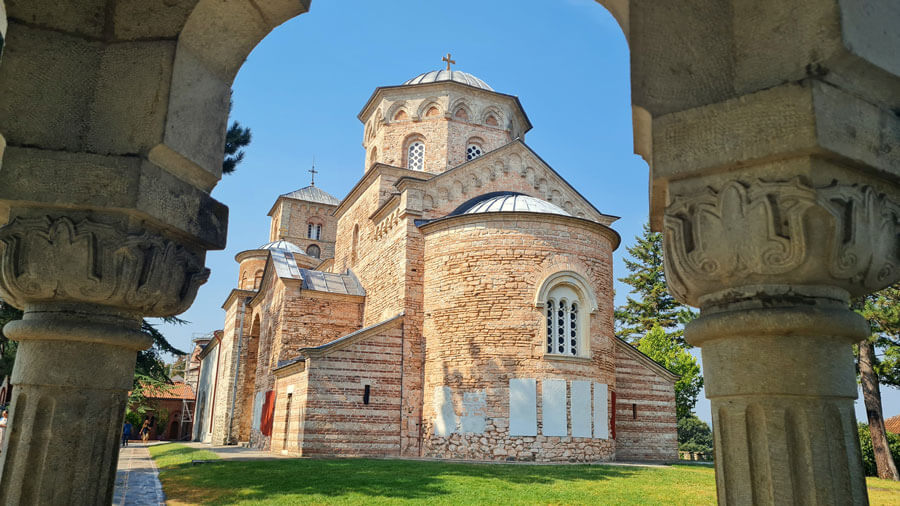
When I entered the monastery, I first tried to imagine what this place must have looked like eight centuries ago and whether Saint Sava himself really walked across this space. (The feeling was not new to me – I had experienced something similar earlier at Manasija and Ravanica, when it seemed as if the striking Despot Stefan Lazarević had just walked past me.) At Žiča, that feeling is perhaps even stronger because you know that one of the most important moments in Serbian medieval history took place here.
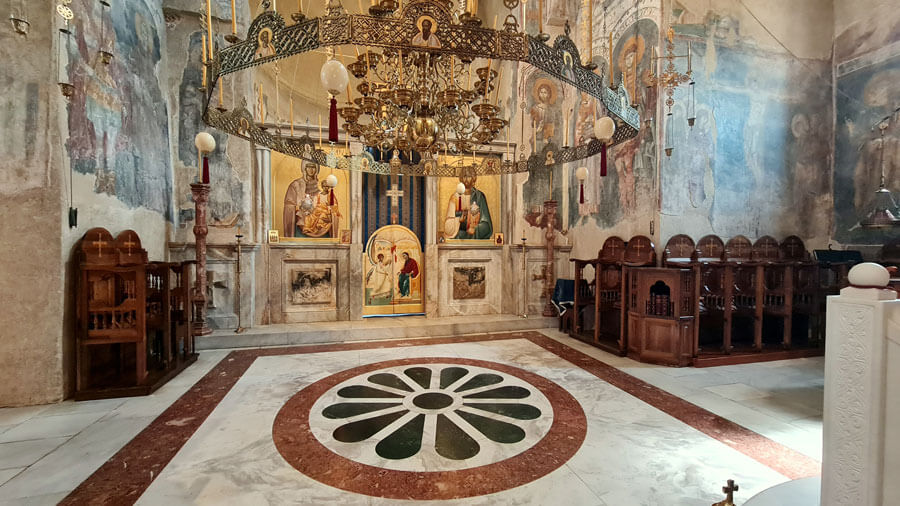
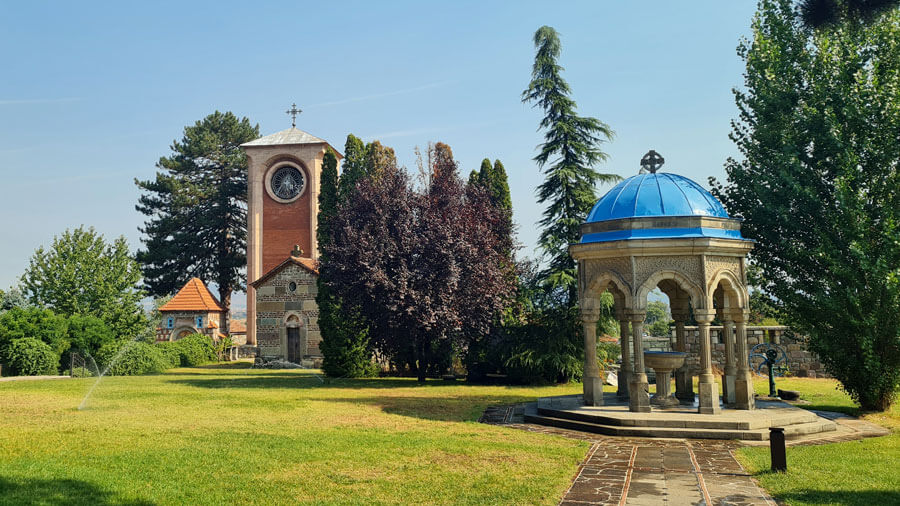
I paid particular attention to the preserved baptistery, because it is difficult to believe that everything we see today has survived unchanged from the time of the Nemanjić dynasty. The red façade of the monastery further emphasises its distinctive character among Serbia’s medieval sacred sites. A visit to Žiča is therefore not simply a visit to another monastery, but a genuine encounter with a place where the foundations of the Serbian medieval state and Church were shaped.
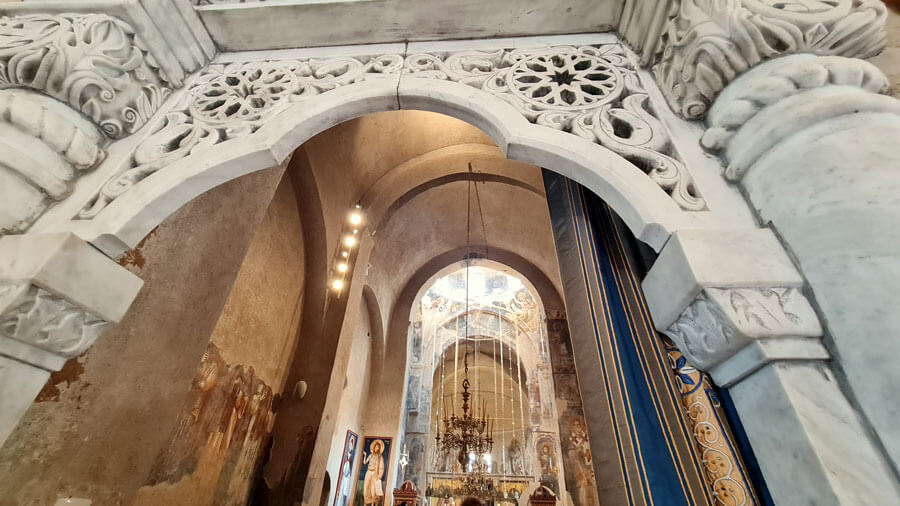
Once you pass through the narthex, the view opens towards the interior of the church and the altar area, while the decorative stone elements, columns and arches framing the passage immediately attract attention. From here, you can see the remains of medieval frescoes on the walls towards the altar particularly well, including fragments from different layers of painting. Although little of the original decoration has survived, these fragments, framed by the stone decoration, give the space an unusual sense of depth and time.
Maglič Fortress
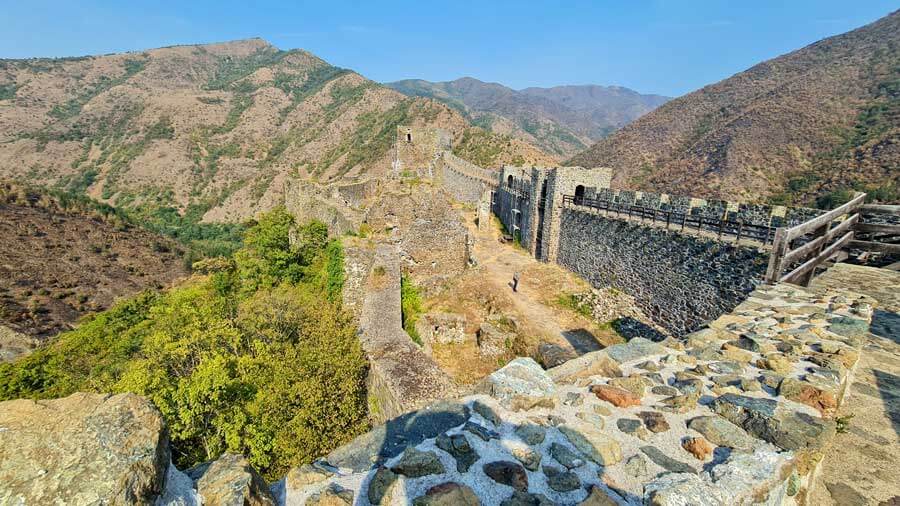
Maglič Fortress stands about 20 kilometres south of Kraljevo, on a high rocky cliff above the Ibar, on the slopes of Mount Stolovi. It is believed to have been built in the 13th century, while it was restored between 1324 and 1337 by Archbishop Danilo II, who also established a monastic school here. The irregular-shaped fortification follows the contours of the rock, while its strong walls are protected by seven towers, including the particularly well-preserved donjon tower. Maglič had great strategic importance because the fortress protected access to the Ibar valley and important Nemanjić monasteries, above all Žiča and Studenica.
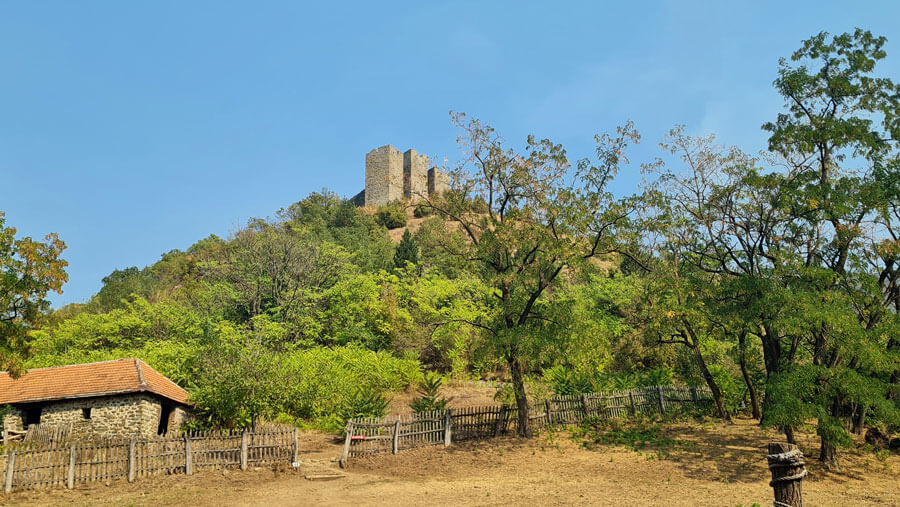
Today, the fortress can no longer be reached via the former suspension bridge, which was severely damaged in the 2020 floods and subsequently collapsed. But this is where another, modern story of Maglič begins: volunteers from the Magličgrad Cultural Centre restored an old family ferry and now use it to transport visitors across the Ibar to the foot of the fortress. Archaeologist Miloš Sretenović, one of the project’s initiators, told me about the project and how he and a group of volunteers began bringing the area back to life after the collapsed bridge effectively cut Maglič off from visitors. Their idea was not simply to provide a way across the river, but to turn the area beneath the fortress into a gathering place, with cultural activities, a campsite and a base for volunteers.
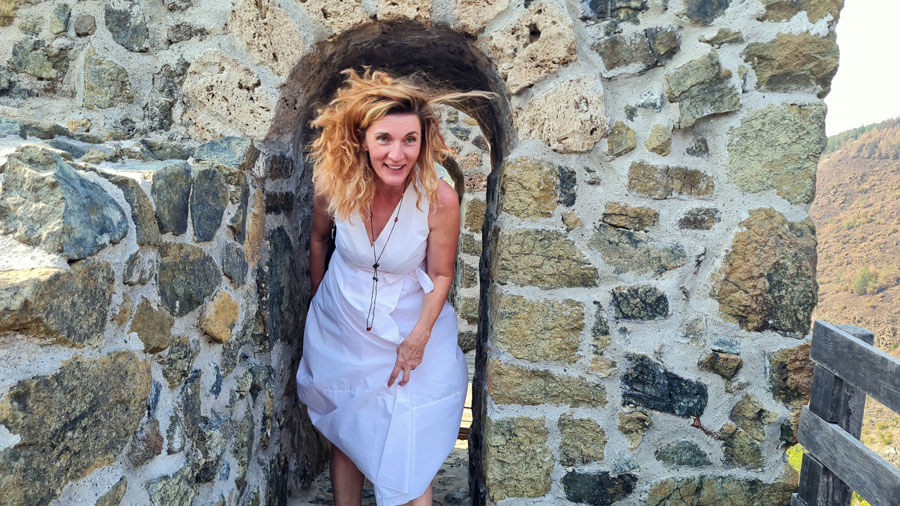
When I arrived at the foot of the fortress with Miran, a colleague from the Kraljevo Tourist Organisation who was patient enough to explore Kraljevo and its surroundings with me, that story was almost as interesting to me as the medieval fortress itself. It shows how a group of people can bring an entire place back to life without major infrastructure. Once you finally cross the Ibar and start climbing towards Maglič, the view of the river and surrounding mountains quickly reminds you why this place was so strategically important for centuries. I climbed the old walls wherever I could, squeezed through every accessible passage and was thrilled by the view from above. Because of it, you forget that your legs are slightly shaking after the steep climb, and you do not even mind walking down to the nearby waterfall, beside which a girl was sunbathing. (A scene straight out of a music video, right?) They say there is also a beach on the other side of the river… That will have to wait for another visit – I had to make it back in time for the ferry.
Studenica Monastery
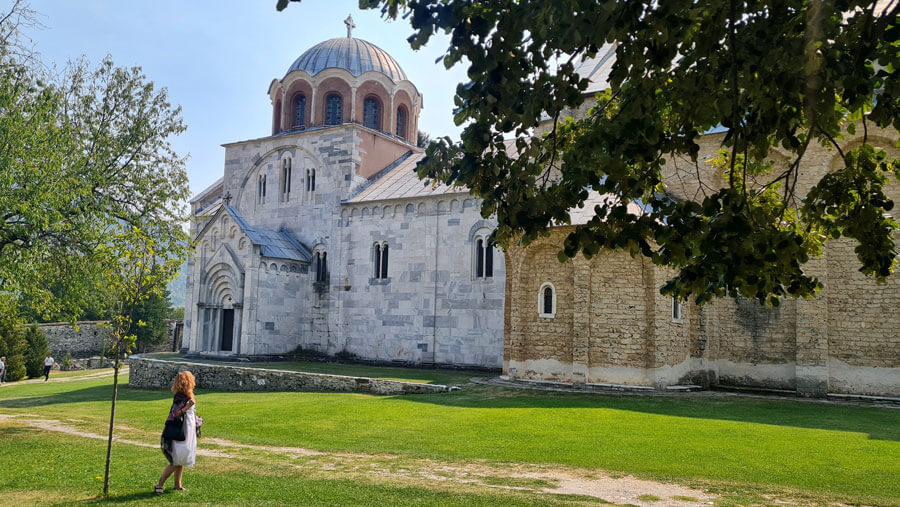
Deep in the Studenica valley, about 60 kilometres from Kraljevo, lies the monastery, one of Serbia’s most valuable medieval endowments. It was founded by Grand Župan Stefan Nemanja in the late 12th century, after he abdicated the throne, and soon became one of the most important spiritual and cultural centres of medieval Serbia. Its complex includes the Church of the Virgin, the King’s Church and several other sacred buildings, while the entire complex is surrounded by an almost circular fortified wall with fortified gates.
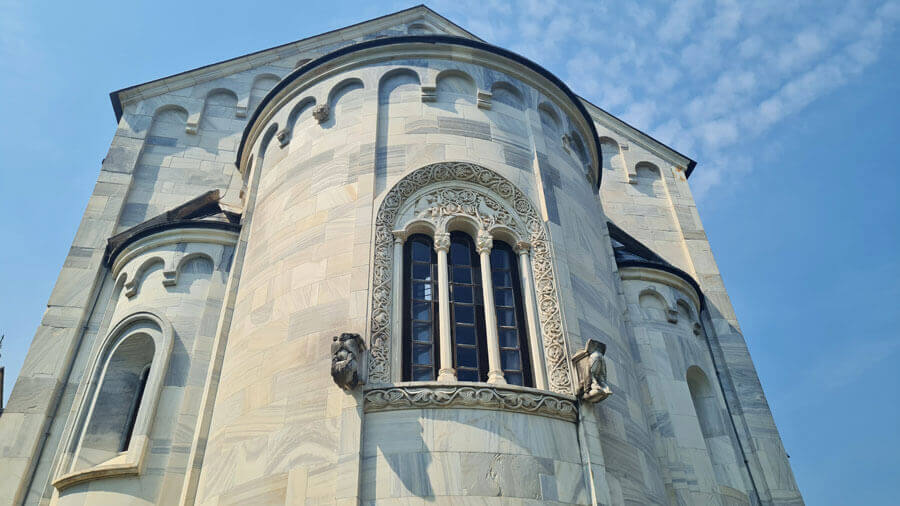
The Church of the Virgin was built of white marble and represents one of the finest achievements of the Raška architectural school, combining a Byzantine foundation with Romanesque elements. Its 13th- and 14th-century frescoes are among the most important achievements of medieval Byzantine painting, and Studenica has been on the UNESCO World Heritage List since 1986. King Stefan Radoslav built the large outer narthex beside the Church of the Virgin around 1230, while King Stefan Uroš II Milutin built the Church of Saints Joachim and Anna, known as the King’s Church, in 1313–14.
The monastery houses the relics of Stefan Nemanja, his wife Anastasia and the first Serbian king, Stefan the First-Crowned, while Saint Sava began his monastic life here and played an important role in shaping the independent Serbian Church.
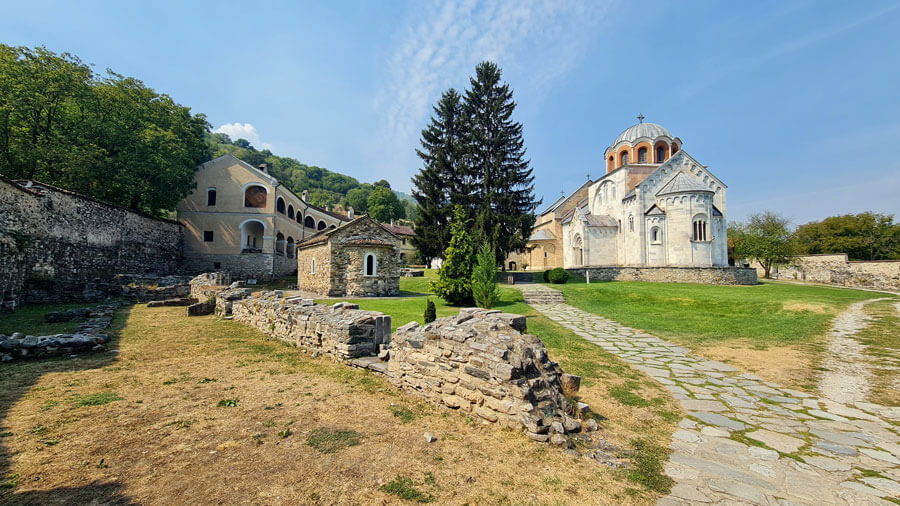
It is difficult to remain indifferent in front of the white marble, dark walls and silence surrounding the church, especially when you know how many great historical figures left their mark here. After all the stories about the Nemanjić dynasty, Studenica seemed to me like a place where you can finally experience that history not only through dates and names, but through a space that has been alive for more than eight centuries.
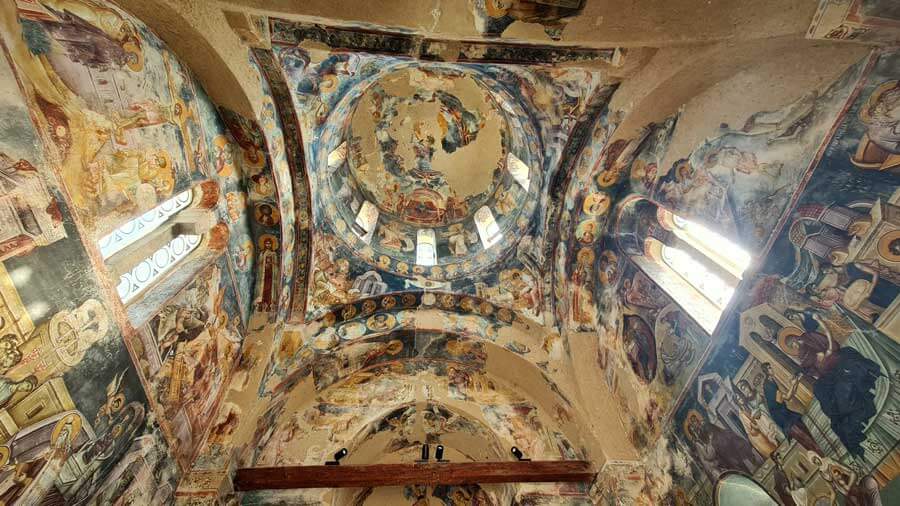
A local monk was very kind and showed us the original frescoes, as well as details in the churches that we should pay particular attention to. This allowed me to take a close look at the famous “Crucifixion” scene against a blue background in the Church of the Virgin, as well as the depiction of the “Virgin and Child” and other parts of the original early-13th-century frescoes. In the King’s Church, I was particularly impressed by the colours on the walls, which remain incredibly vivid even after so many centuries – the blue and yellow-gold combination could easily pass today as something very modern and fashionable.
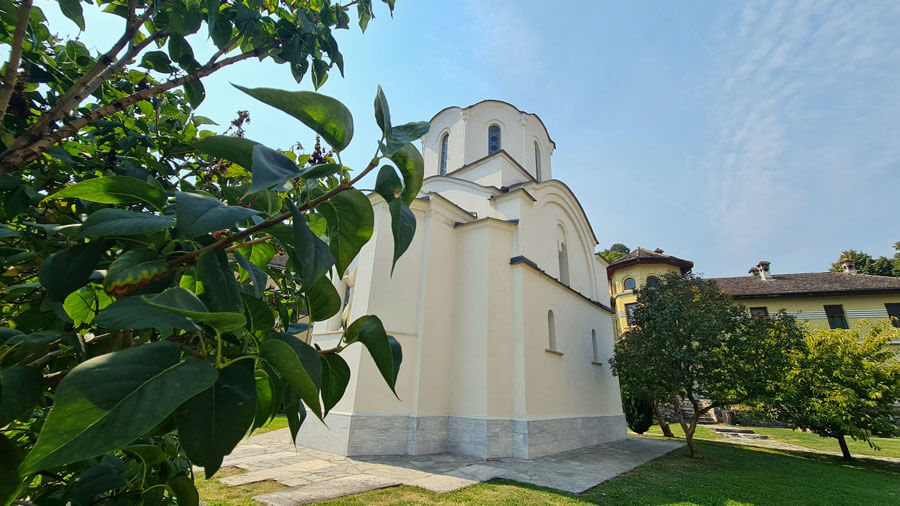
My eye was also drawn to the small stone Church of St Nicholas, known as Nikoljača, built around 1230, whose unknown founder most probably belonged to the Nemanjić dynasty. Its simple, almost austere exterior and the stone from which it was built gave me the feeling that I had stepped through time. In the complex today, you can have a coffee, buy souvenirs – from books and incense to magnets – and see the remains of former buildings that testify to how large the monastery complex once was. According to historical sources, there were once as many as 14 churches within the complex, while only three are fully preserved and still in use today.
If you have time after exploring the centre, it is worth visiting Kraljevački oktobar Memorial Park, a place that commemorates the mass execution of Kraljevo’s civilians in October 1941. The memorial complex, completed in 1970 according to a design by architects Spasoje Krunić and Dragutin Kovačević, covers 12 hectares and is designed with stone sculptures resembling felled trees. The three burial areas where the remains of victims and fallen fighters are buried are particularly moving. Not far from here is the Church of St Sava, one of the city’s newer religious buildings, while those who enjoy longer walks may want to explore the Stolovi mountain area above the Ibar. Hiking and recreational activities take place on Stolovi, while the “In Search of Narcissus” event is particularly attractive in spring. If you want to get out of the city and into nature without going far, this is a good way to continue your day.
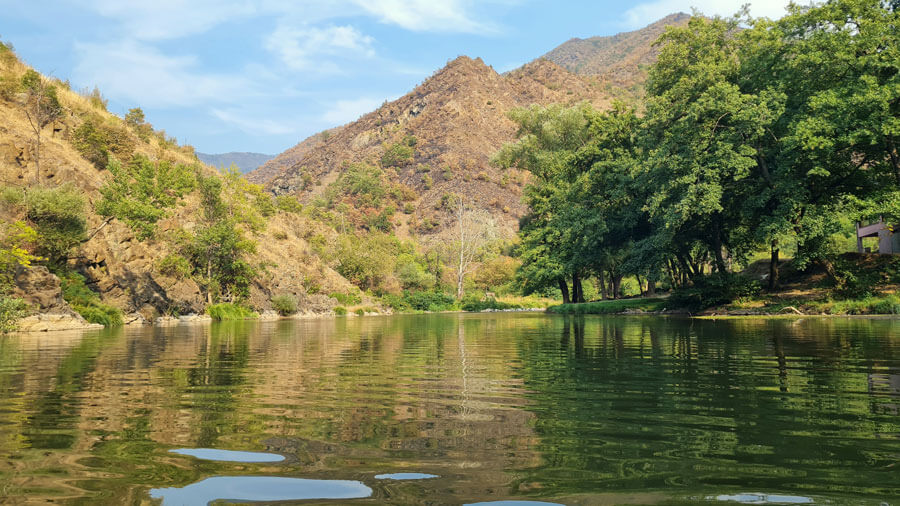
For a completely different experience of the Kraljevo area, head towards Goč, a mountain whose highest peak reaches 1,127 metres. Beech and fir forests, springs and mountain streams, walking trails and Lake Selište make it attractive throughout the year, while in winter the Dobre Vode area is used for skiing, and in summer for sports and walking and running trails. Those looking for a spa break can visit Mataruška Banja, on the right bank of the Ibar, known for its thermal mineral water with temperatures between 48 and 52°C. Even quieter is Bogutovačka Banja, about 23 kilometres from Kraljevo, on the wooded slopes of Troglav and along the Lopatnica River. Its thermal mineral water emerges at a temperature of 25–27°C, and the place is more focused on peace, relaxation and spending time in nature than on traditional spa tourism. If you want to combine swimming, walking and nature, both spas can be a pleasant addition to your Kraljevo itinerary.
The Kraljevo area, however, is so rich that it can easily turn into several separate day trips. In the Ibar valley, you can also visit the village of Lopatnica, known for its clear river and rural households, while lovers of active holidays will enjoy Stolovi, Goč and the surrounding hiking trails. In summer, the Ibar is suitable for boating, kayaking and canoeing. If you are more interested in culture and history, you can combine visits to medieval sacred sites in the wider area with time in nature and the spas. After everything I saw during this trip, it was precisely this variety that struck me as one of Kraljevo’s greatest advantages – in a single day, you can walk through the city square, sit by the Ibar and visit medieval monasteries, and the next morning set off towards a mountain or spa. The more time you give Kraljevo, the more reasons you will have to return.
The full Serbia Series: THINGS TO DO IN SERBIA