If you need a freelance travel writer or you would like to see your country, city, flight, etc., presented on the blog, drop me an email.
Find our more on Freelance Travel Writer page.

Crete had somehow eluded me for years. When I finally made it there, I realised that I would have to return at least a couple more times if I ever hoped to explore the island in its entirety. Still, here is my take on Things to Do in Crete, at least when it comes to the western part of the island. The largest Greek island draws visitors with its turquoise waters, mountainous landscapes and gorges, ancient towns and a history stretching back thousands of years. Venetian harbours, monasteries, archaeological sites and beaches follow one another, tempting you to spend every day exploring a different corner of the island. And then there is that unmistakable Mediterranean atmosphere that gives Crete a charm of its own.
Crete: What You Should Know
Crete is the largest Greek island and the fifth-largest in the Mediterranean, lying between the Aegean and Libyan Seas. It stretches for approximately 260 kilometres from east to west, while its width varies from just 12 to around 60 kilometres. This considerable variation in geography means that both the scenery and climate can differ quite noticeably from one part of the island to another. The north is home to the larger towns and more developed holiday resorts, while the southern coast is known for quieter settlements, steep mountains and wilder beaches. Three major mountain ranges dominate the interior: the White Mountains (Lefka Ori), Mount Ida and the Dikti Mountains, with their deep gorges, plateaus and traditional villages.
Crete is the birthplace of the Minoan civilisation, one of the earliest advanced civilisations in Europe, which reached its peak during the second millennium BC. Over the centuries that followed, the island was ruled by the Romans, Byzantines, Venetians and Ottomans, each leaving a distinct mark on its towns, architecture and cultural heritage. Crete officially became part of Greece in 1913. Today, it is celebrated for its remarkable history, varied landscapes, Mediterranean cuisine and the hospitality of its people.
For my own late-season summer escape, I chose Chania on the island’s north-western coast. I arrived towards the end of September, and autumn in Crete turned out to be far more interesting than I had expected. There was occasional drizzle around Chania, but all I had to do was drive some twenty kilometres in either direction to find summer again: sunshine, warm water and a perfect day at the beach. That is precisely what I shared in my Instagram Stories, showing how I managed to dodge the rain and clouds. On an island as large as Crete, weather conditions can vary considerably, sometimes even between neighbouring bays.
Locals told me that the tourist season often continues well into October and November. Autumn also has another considerable advantage: the winds that can make some beaches difficult to access during July and August tend to ease from September onwards. During my stay, from late September through the first half of October, daytime temperatures hovered around 27°C, while the sea was a pleasant 22–24°C.
In this article, I will take you around Chania and its surroundings, as well as to ancient sites in the western half of the island, monasteries, seaside towns and beaches along both the far western and southern coasts. This is my personal story of Crete, filled with interesting details and practical tips to help you plan your own visit.
View this post on Instagram
Things to Do in Crete: Explore Chania
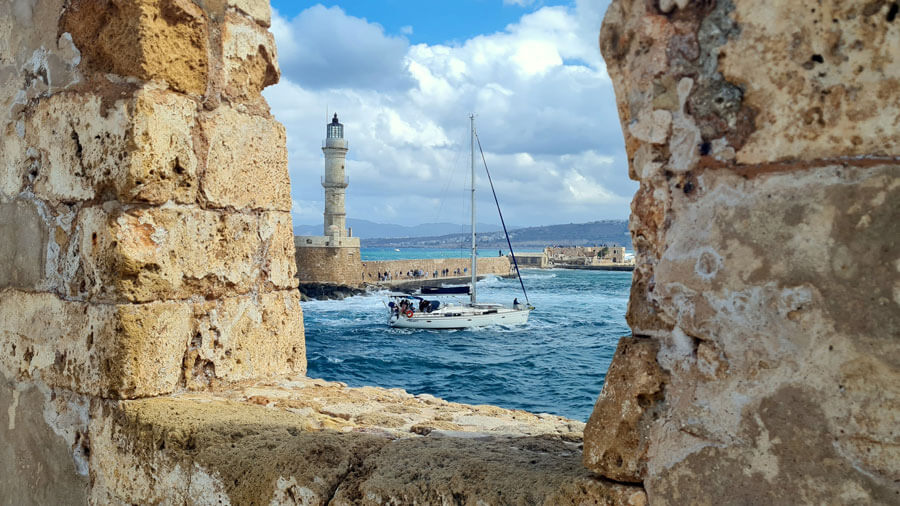
Chania (Chania) lies on the north-western coast of Crete. It is the island’s second-largest city and one of its most beautiful historic centres. Its history stretches back more than five millennia: the ancient city of Kydonia, an important Minoan settlement, once stood where the Old Town is today. After the Romans and Byzantines, the Venetians took control of Chania in the 13th century. During almost four centuries of rule, they built the harbour, shipyards and defensive walls. The Ottoman conquest in 1645 brought further architectural and cultural influences, which is why Venetian mansions, churches, mosques and old Ottoman buildings still stand side by side throughout the city. Crete was united with Greece in 1913, and Chania remains one of the island’s most recognisable symbols of its history and architectural heritage.
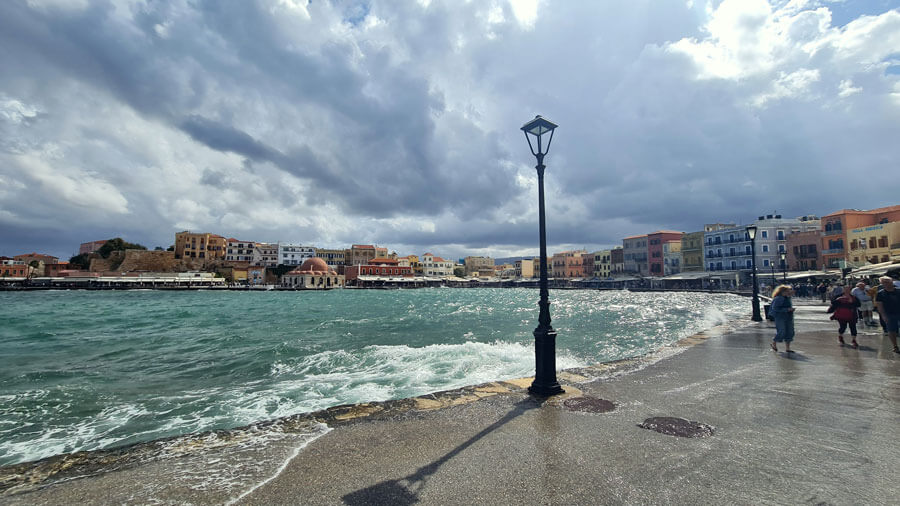
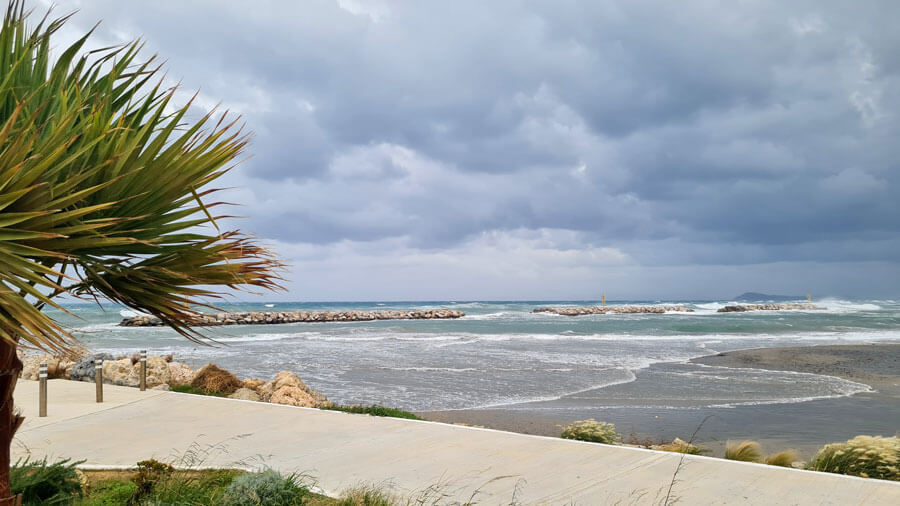
I explored Chania on days when clouds were gathering to the west of the city, so wandering through the Old Town was a lovely way to make the most of the day without heading to a beach with rough seas. Although the sun was shining, the wind was whipping up quite impressive waves in the harbour. Every now and then, they spilled over the edge of the small harbour and splashed across the promenade. Tourists were wading through the water, while restaurant owners hurriedly moved tables and chairs to prevent the waves from catching their guests in the middle of lunch. It was a rather unusual sight: the sun was still warm, yet the sea was behaving as though it were a much colder, stormier day.
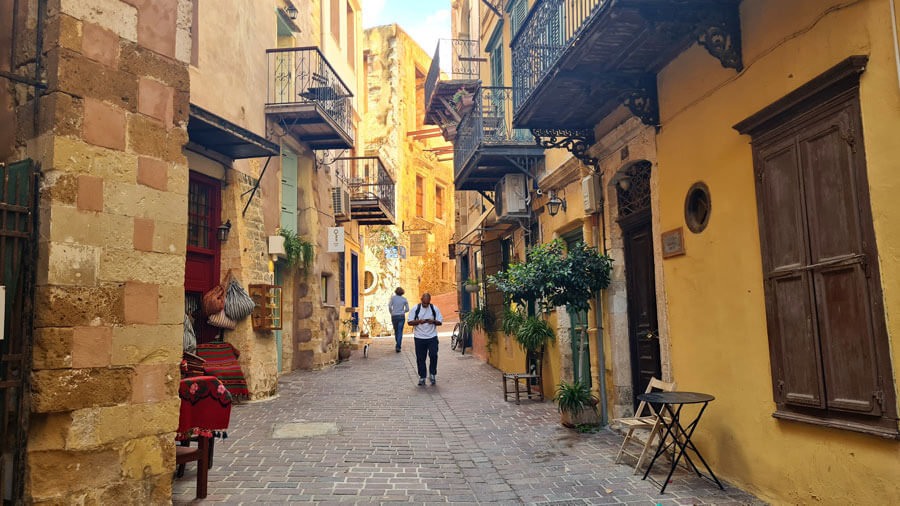
The best way to explore the Old Town, however, is to take your time and wander into the narrow lanes that branch out in every direction from the harbour. Find a restaurant, preferably one tucked beneath the shade of vines or flowering shrubs, surrounded by old stone walls and façades that seem to hold stories from another era. You may well find a cat brushing against your legs while you eat, as passing tourists pause to take a curious look at what is on your plate. These lanes are also lined with souvenir shops selling everything from ceramics and traditional crafts to beautiful textiles worth taking home. And if you fancy something local along the way, be sure to try one of Crete’s little pies. Chania is the kind of city that wins you over not only with its landmarks, but also with all those small details that make you want to stay just a little longer.
Akrotiri Peninsula: Monasteries and Beaches
The Akrotiri Peninsula lies east of Chania, between the city and Souda Bay, and makes one of the most rewarding day trips in western Crete. Along with the island’s airport, you will find olive groves, vineyards, historic monasteries and several lovely beaches here. They are particularly appealing when wind and waves make swimming difficult elsewhere along the coast. Among the best-known landmarks are the Monasteries of Agia Triada and Gouverneto, while beach lovers can choose between the coves of Marathi, Loutraki and Stavros. Akrotiri is especially interesting because it brings together history, nature and the sea, with most places easily reached by car from Chania.
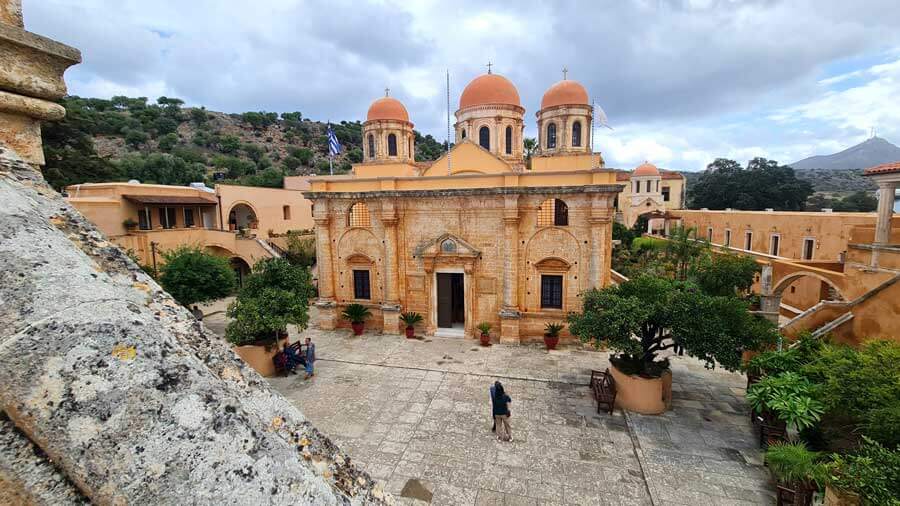
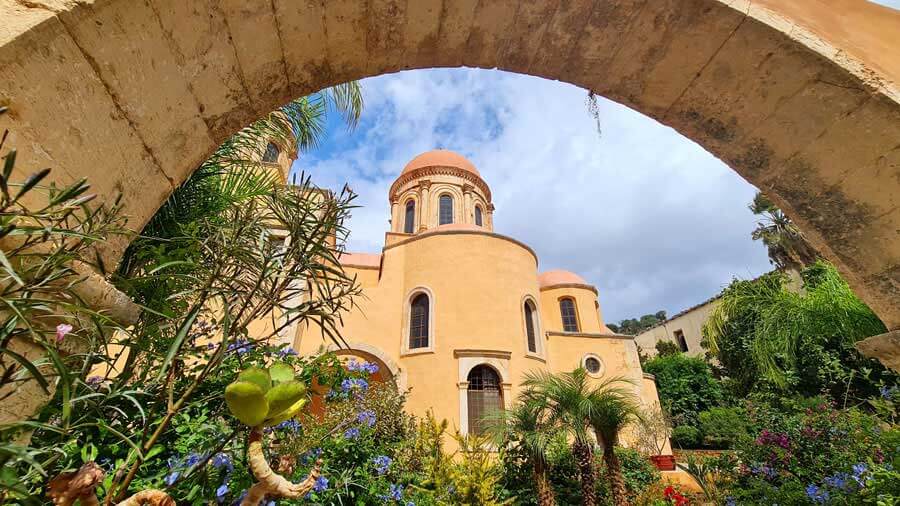
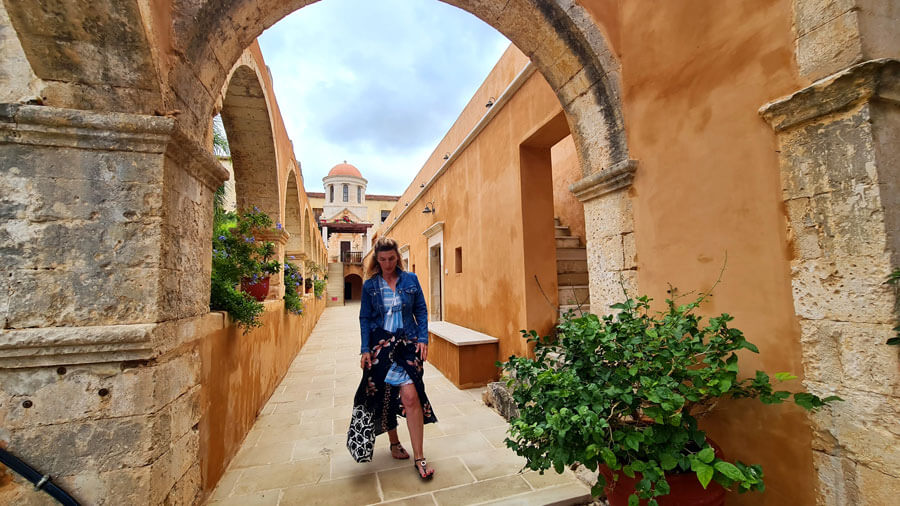
I escaped the occasional drizzle around Chania and headed to Akrotiri several times, and each visit proved to be an excellent decision. My first stop was the Monastery of the Holy Trinity, also known as Agia Triada Tzagarolon, one of the most beautiful and historically significant monastic complexes in Crete. It was founded in the early 17th century by two brothers, Jeremiah and Lawrence Tzagarolo, monks from a Venetian family. Its architecture is particularly interesting for the way it combines Orthodox monastic traditions with Western European Renaissance influences. The monumental entrance, stone courtyard and domed church are especially striking. Construction was interrupted when the Ottomans conquered Chania in 1645. The monastery was later burned during the uprising of 1821 and rebuilt in 1830. Today, it remains an active Orthodox monastery, surrounded by cypress trees, olive groves and vineyards, and also houses a small museum collection.
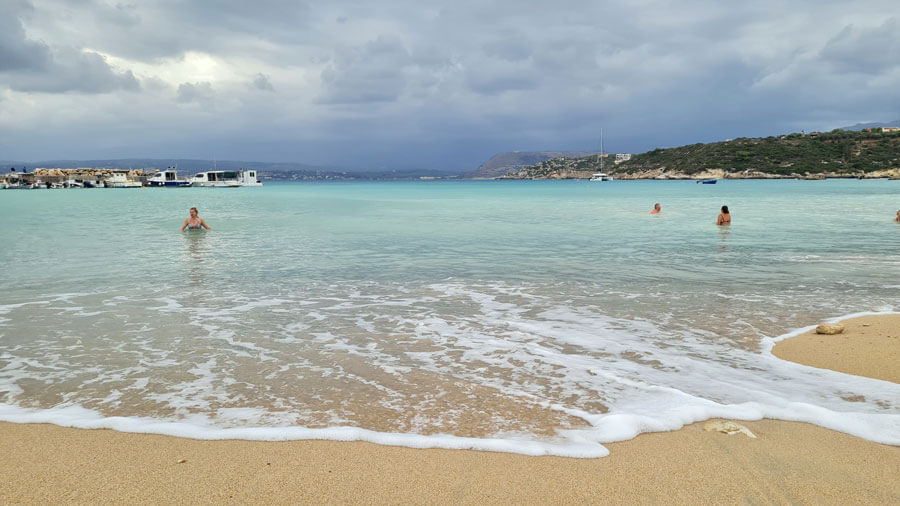
From the monastery, I continued to Marathi Beach, on the south-eastern side of the peninsula, along Souda Bay. I found one of those little sandy coves that make you forget all about the weather forecast: the sea was calm, clear and wonderfully inviting, despite the clouds and occasional breeze. Marathi is relatively sheltered from the prevailing northerly winds, and its two sandy coves have shallow water and several tavernas right by the shore. I was particularly amused by a comment I received on Instagram from someone who said that swimming here in August had been out of the question, while I was enjoying warm, tranquil water in early October. Of course, conditions change from one day to the next, but experiences like this show why it is worth exploring different parts of Crete rather than giving up on the beach as soon as clouds appear.
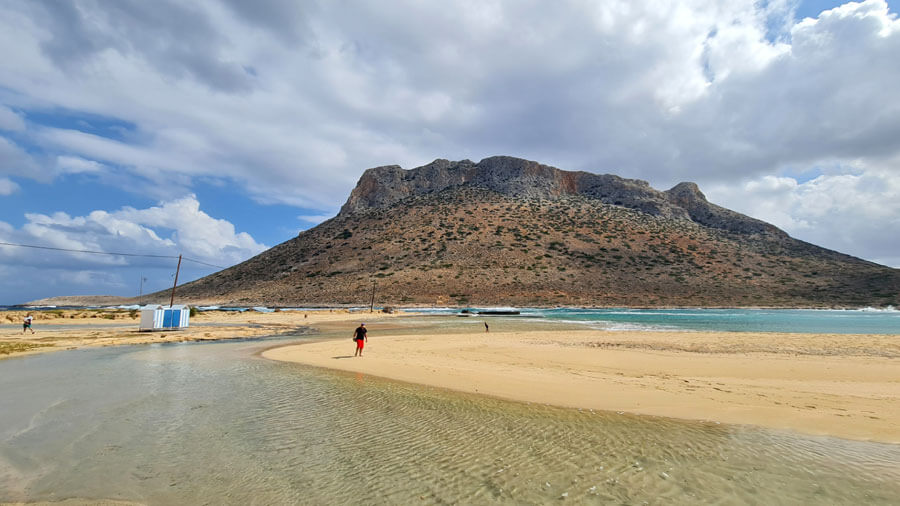
My final stop was Stavros, in the north-western part of Akrotiri, home to the famous beach also known as Zorba’s Beach. A nearly circular sandy cove has formed between the rocky hills here, which often makes the water much calmer than on open beaches exposed to the wind. The distinctive silhouette of Mount Vardies rises immediately behind the beach, creating one of Crete’s most recognisable landscapes. This was the setting for the final beach scene in the 1964 film Zorba the Greek, in which Anthony Quinn, playing Alexis Zorba, performs the famous sirtaki dance on the sand with Alan Bates. Directed by Michael Cacoyannis, the film was shot in several locations across the island, but Stavros is forever associated with that final dance, which has become one of the most recognisable images of Greek culture. It is easy to recognise the spot from the film today. For me, Stavros was another perfect discovery on a day when the weather around Chania was unsettled: a sheltered cove, an unusual mountain backdrop and wonderfully inviting water.
Knossos and the Minoan Civilisation
Knossos lies about five kilometres south of Heraklion, on Crete’s northern coast, and is the most important archaeological site of the Minoan civilisation. A large urban settlement stood here as early as the Neolithic period, while the palace reached its greatest prosperity between 2000 and 1350 BC. The first archaeological excavations were carried out in 1878 by Minos Kalokairinos, a merchant and amateur archaeologist. In 1900, British archaeologist Arthur Evans began systematic excavations that revealed much of the palace complex.
Knossos was the political, economic and cultural centre of Minoan Crete, with sophisticated crafts, trade and systems of administration. The palace complex covered approximately 22,000 square metres and consisted of numerous corridors, courtyards, staircases, storerooms, ceremonial spaces and residential quarters. It is also closely associated with the legends of King Minos, Daedalus, Icarus, the Labyrinth and the fearsome Minotaur, a creature with the body of a man and the head of a bull. Today, visitors can explore the remains of the monumental palace, including the Throne Room, the Grand Staircase, the Queen’s Apartments, storerooms containing enormous clay vessels known as pithoi, and numerous frescoes, some of them reconstructed. Knossos is one of the most important monuments of European prehistory and an essential stop for anyone wishing to understand Crete’s past.
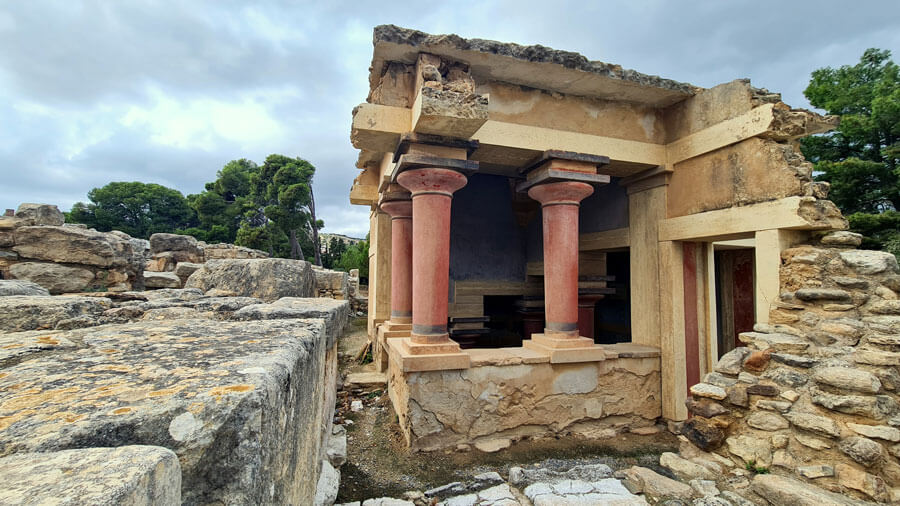
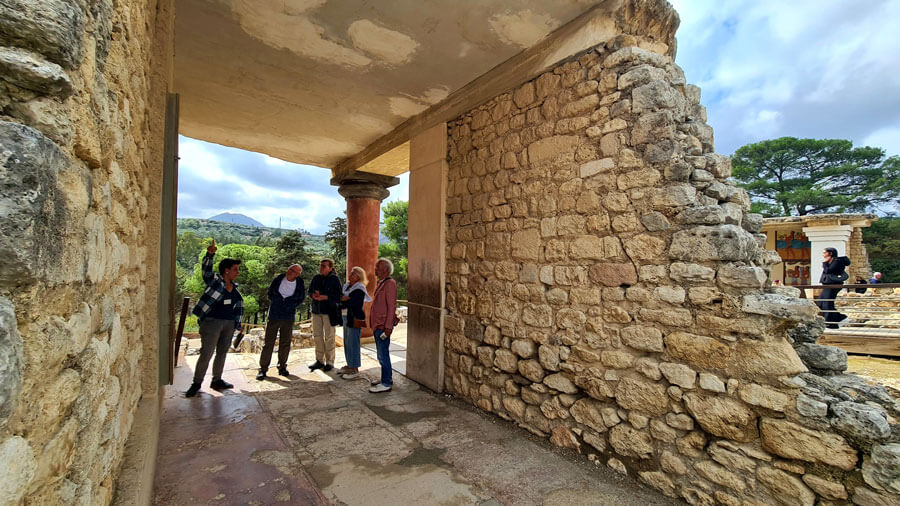
I visited Knossos on one of those days when clouds had gathered over Chania and a little drizzle was falling. However, as I drove towards Heraklion, roughly halfway across the island, the clouds began to disperse, and the sun came out more and more as I explored the palace. The complex is truly impressive, and it is worth setting aside enough time to walk through its different sections and imagine what life was like more than three and a half thousand years ago. The highlights include the large Central Court, the Throne Room with its stone seat and painted griffins, the Queen’s Apartments with the famous dolphin fresco, and the storerooms where enormous clay vessels once held food and liquids. Look out for the bull frescoes, too, as the bull held a special place in Minoan culture and religion. You will also see monumental staircases, remains of corridors, light wells, a drainage system and the distinctive red columns that have become one of the symbols of Knossos. (If you would prefer to have a guide and avoid waiting in line to buy tickets, click here to book a tour before your visit.)
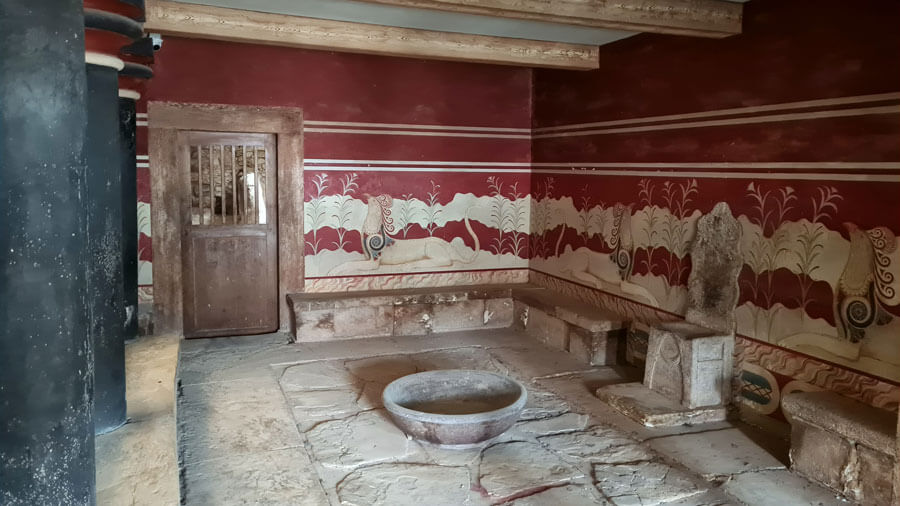
What fascinated me most was the feeling of walking through a place once occupied by the people of the Minoan court, perhaps even those close to the legendary King Minos himself. Although some sections were reconstructed during Evans’s excavations, this does little to diminish the impression the site makes. As you follow the stone corridors and cross the courtyards, it is easy to imagine life in the palace, the ceremonies, and the merchants and craftspeople who came here from different parts of the Mediterranean. Then there is the myth of the Minotaur, the monster said to have lived in a labyrinth beneath the palace, which lends Knossos an altogether more mysterious atmosphere. I once read that the palace had 1,500 rooms and was itself described as a labyrinth, so it is easy to see how a myth of a half-man, half-bull creature might have taken shape here.
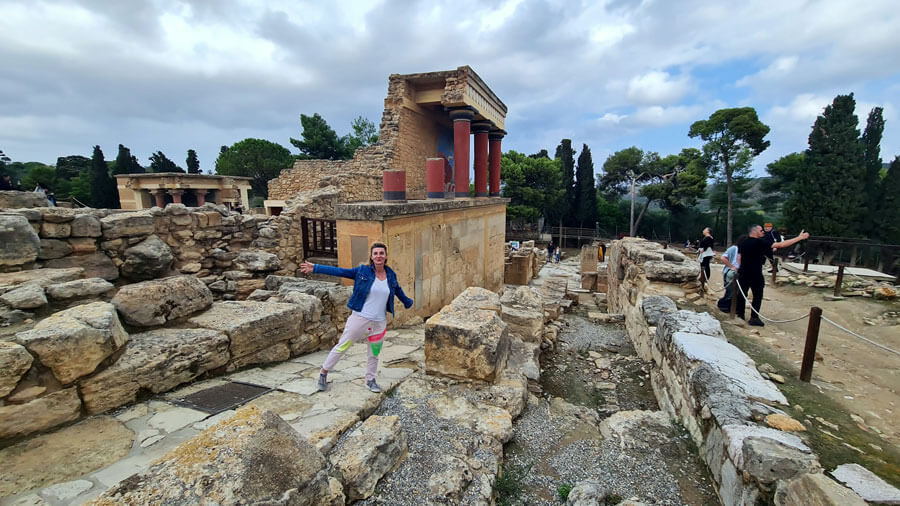
If you are interested in history and archaeology, this is a place you should not miss during your stay in Crete. It is simply part of the essential cultural heritage of the island. As you will discover, it would be a shame to reduce Crete to beaches and the sea alone. I also bought a lovely book about Crete here, which will always make a wonderful souvenir. (And should I mention that just as I left the archaeological site, the heavens opened and the rain was so heavy that even my umbrella was of little help? Shops along the street near the entrance sell rain ponchos for two or three euros, and they are not a bad idea. Fortunately, the downpour started after I had finished exploring. I then found myself squeezed onto the terrace of a nearby restaurant with a crowd of other tourists, trying to shelter beneath the awning while drinking hot chocolate and waiting for a chance to dash to the car park.)
Rethymno: History and Old-World Charm
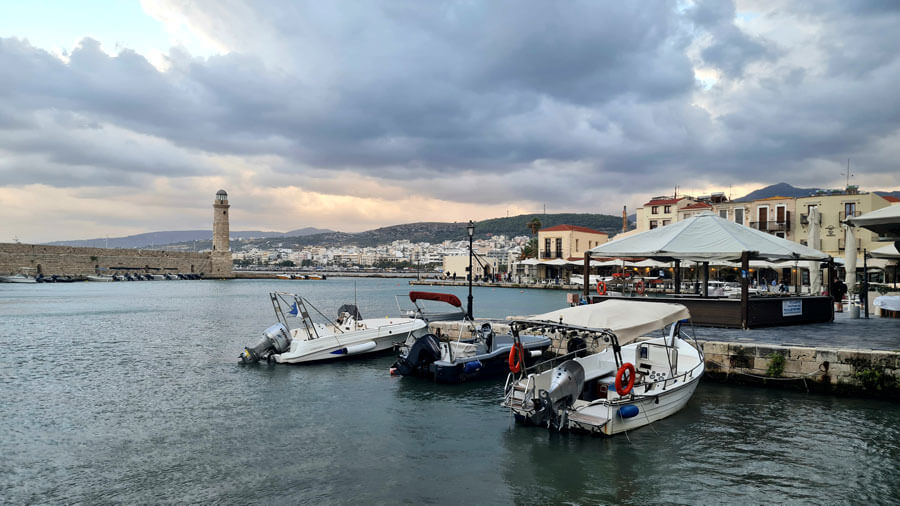
Rethymno lies on Crete’s northern coast, between Chania and Heraklion, and is the island’s third-largest city. Its historic centre has preserved some remarkable examples of Venetian architecture, alongside numerous traces of the Ottoman period, making it one of the most beautiful old towns in Greece. The city developed in ancient times, but gained much of its importance under Venetian rule, when the harbour, grand residences and defensive structures were built. Its best-known landmark is the Fortezza, a fortress erected between 1573 and 1580 on a hill overlooking the city, to protect it from attacks from the sea. In the Old Town, Venetian mansions, stone arches, fountains, churches, a mosque and narrow lanes sit side by side, while the small Venetian harbour and lighthouse remain among the city’s most recognisable sights.
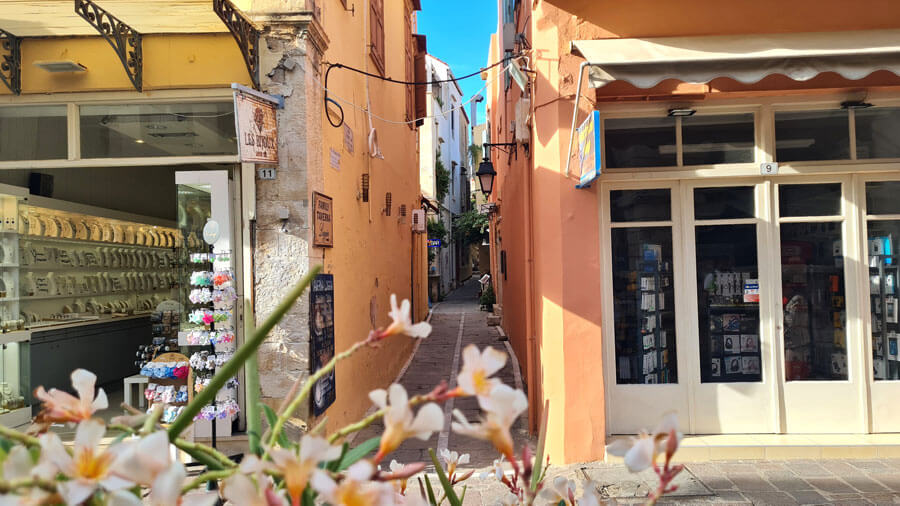
I first visited Rethymno on my way back from Knossos. Since it lies roughly halfway between Heraklion and Chania, it makes a perfect stop for a break and a chance to discover another fascinating Cretan town. Allow at least a few hours to explore the Old Town, as some of its loveliest details reveal themselves when you simply wander without a fixed plan. Find a restaurant beneath flowering branches, surrounded by striking façades, stone arches and details of Venetian architecture.
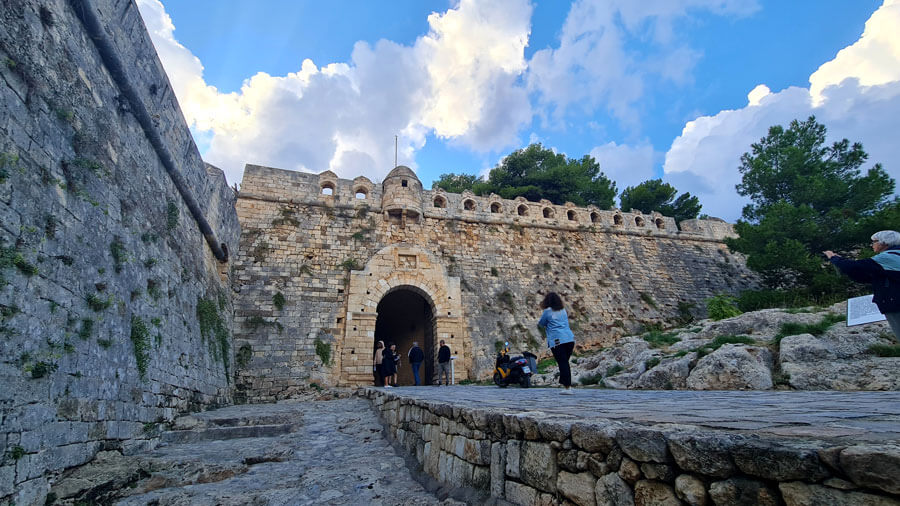
Make sure you visit the Rimondi Fountain, dating from 1626, with its three lion-head spouts that still release water, as well as the Venetian Loggia, once a meeting place for the city’s leading citizens. The Neratze Mosque, with its tall minaret, is another interesting landmark. It was originally a Venetian church before being converted into a mosque during Ottoman rule. If you have time, climb up to the Fortezza for lovely views over the rooftops of the Old Town, the harbour and the sea. Do not miss the Venetian harbour and Egyptian Lighthouse, either, or the small local shops selling handicrafts, textiles, ceramics and unusual souvenirs. Rethymno is just the place for a leisurely stop: a town where you can stroll, order a coffee or lunch, and let its narrow streets lead you from one landmark to the next.
Plakias and Damnoni on Crete’s Southern Coast
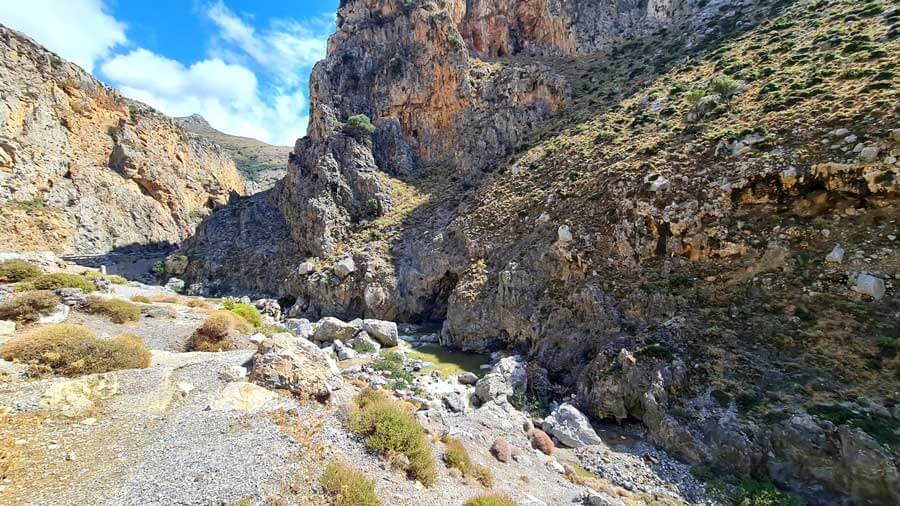
Plakias and Damnoni lie on Crete’s southern coast, in the Rethymno region, facing the Libyan Sea. This part of the island is known for its beautiful sandy and pebbly beaches, crystal-clear water, mountain scenery and a more relaxed atmosphere than the north coast. Damnoni is a spacious bay with pale sand and turquoise water, while Plakias is a larger seaside village with a long beach, tavernas, cafés, shops and holiday accommodation. The two are only about five kilometres apart, making them easy to visit on the same day. The natural landscape inland adds to the appeal of this part of Crete, particularly the impressive Kourtaliotiko Gorge, through which the road from Rethymno descends towards the southern coast.
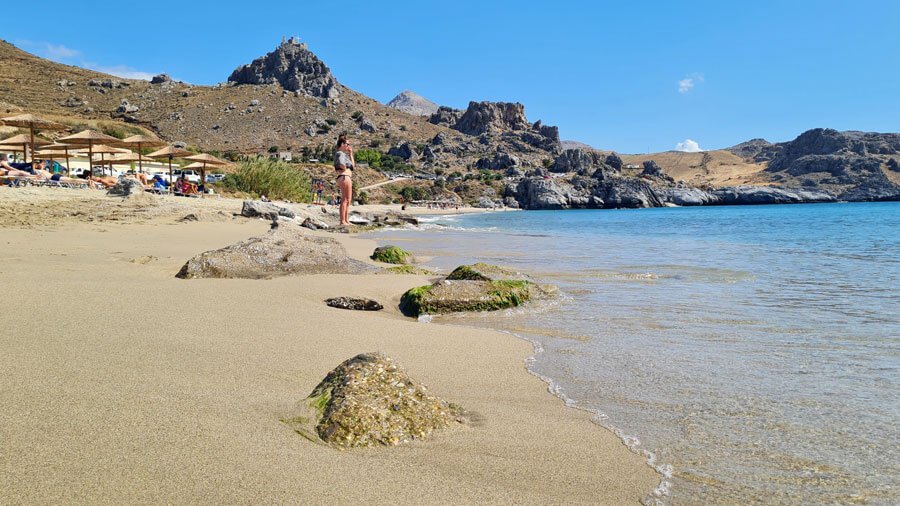
I headed south on a day when it was drizzling around Chania, and it turned out to be one of the loveliest and most peaceful days of my entire holiday. The locals had advised me to keep an eye on both wind direction and strength, as well as temperature and cloud cover, when checking the weather forecast. When the northern coast is windy and the sea is rough, the southern side of the island often enjoys completely different conditions – sometimes a proper summer’s day. So I decided to cross to the other side of Crete and make my way to Damnoni, south of Rethymno. The drive from Chania takes a little over an hour and a half, while the journey from Rethymno to Damnoni takes roughly 40–50 minutes, covering around 34–35 kilometres depending on the route. Along the way, the road passes through the impressive Kourtaliotiko Gorge, which stretches for about three kilometres. Its steep limestone cliffs rise on either side of the road, sometimes appearing so close that you feel as though you are driving through a narrow passage carved into the mountains.
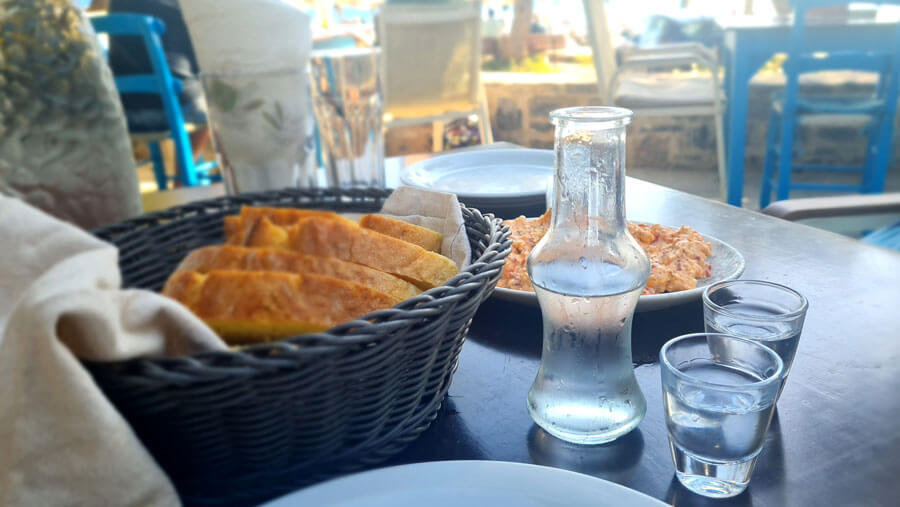
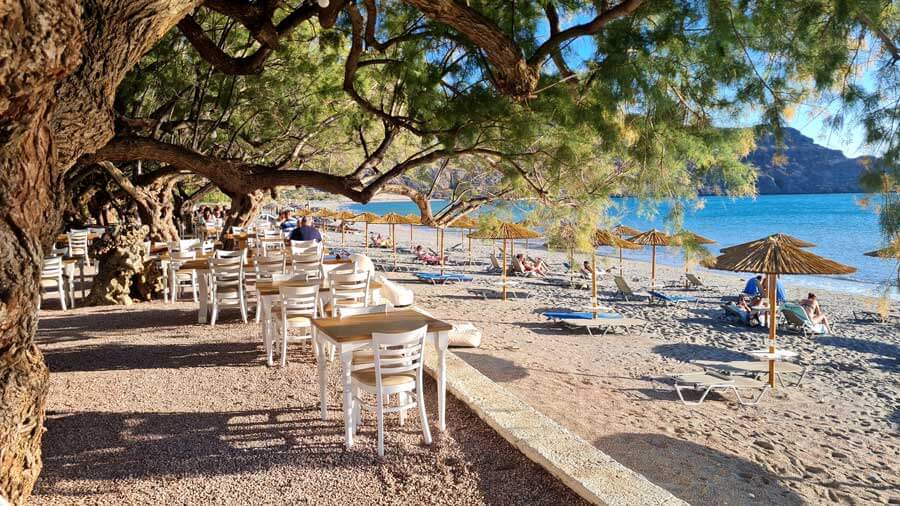
When I arrived in Damnoni, I was greeted by sunshine, calm water and perfect swimming conditions. We settled onto sun loungers, enjoyed the warm, clear sea and had the kind of carefree beach day you hope for when you come to Greece. We did not have to go far for lunch, either. We sat at a restaurant right by the shore and ordered shark fillets and an interesting creamy feta spread served as a starter with bread. At the end of the meal, we were offered traditional Cretan raki, a small gesture of local hospitality. Everything was just as a day by the sea should be: no rush, good food, a view of the turquoise bay and the feeling that summer had no intention of leaving just yet.
If you make it to Damnoni, it is worth continuing to Plakias, just a few minutes’ drive away. This seaside village has a rather different atmosphere, with its long beach, waterfront promenade, restaurants and cafés. You can stop for a coffee, take a stroll along the shore or enjoy another swim. And if you like this part of Crete, Plakias is also a convenient base for exploring the surrounding beaches, including Ammoudi, Skinaria and the famous Preveli.
Elafonissi: Pink Sand and a Cave
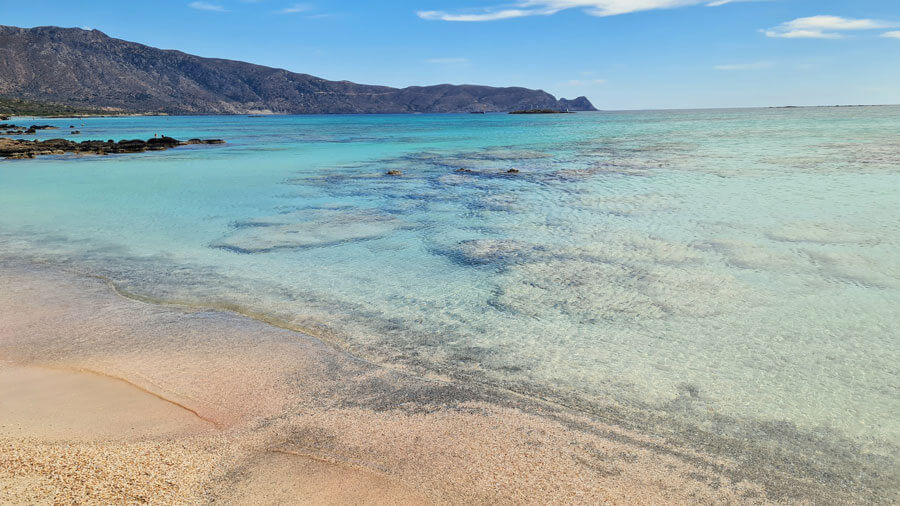
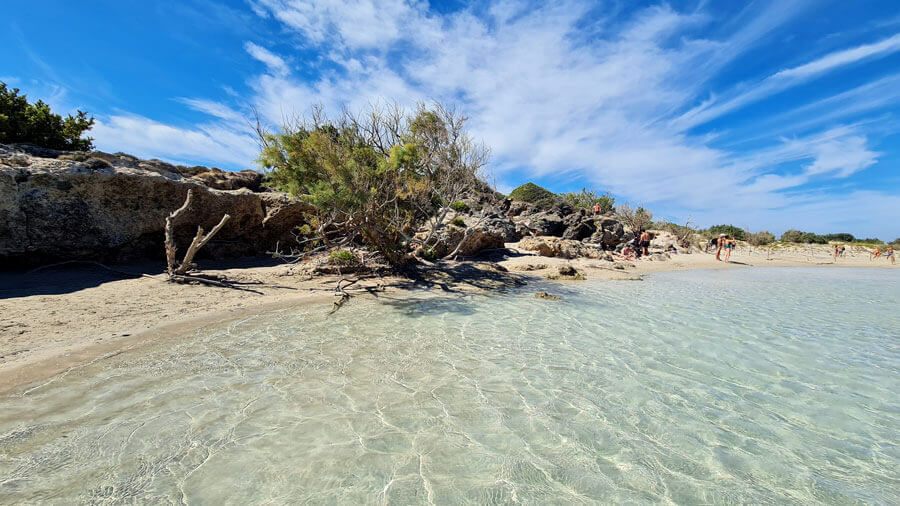
Elafonissi lies in the south-western part of Crete, approximately 76 kilometres from Chania, and takes around an hour and a half to reach by car. The area is famous for its unusual lagoon, shallow turquoise water and sand that takes on delicate pink hues in places due to crushed shell fragments and marine organisms. A shallow lagoon separates the small island from the mainland, and depending on the water level, you can walk across it to the sandbars and beaches further out. The entire area is part of the Natura 2000 network of protected natural sites, as it provides a habitat for rare plant species, marine life and protected birds. Rare coastal plants grow here, including sea lilies, while the surrounding waters are home to the Mediterranean monk seal. Given the area’s fragile ecosystem, it is important not to take sand or shells, damage protected vegetation or stray from designated beach areas. Elafonissi is one of Crete’s best-known natural attractions and can get very busy during the summer months, particularly around the main lagoon.
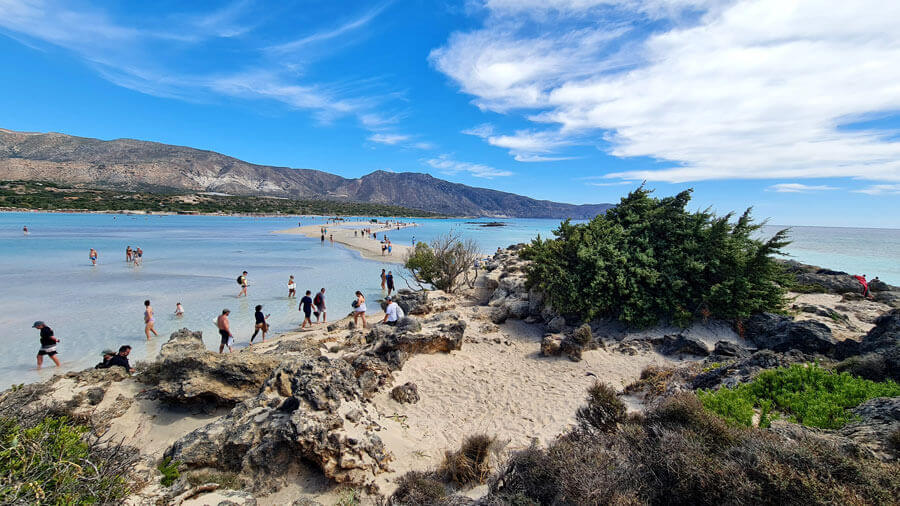
I set off for Elafonisi with a little apprehension, having come across online comments about a winding, almost village-like road, and wondering what I was letting myself in for behind the wheel. As it turned out, there was no reason to worry. The road is paved; it simply winds through the mountains before descending towards the south-western coast. Some stretches are quite narrow, but everyone drives slowly. The route takes you through the impressive Topolia Gorge, with its towering rocky cliffs, deep ravines and occasional openings that reveal glimpses of the sea. You need to take your time, but that is part of the pleasure of this drive. There is plenty to admire, and every now and then a glimpse of blue between the high cliffs is enough to make you say “wow” all over again. It is easy to understand why this route, too, belongs on any list of Things to Do in Crete. If you would rather visit Elafonisi on an organised excursion, click here to explore the available options, including boat trips, group tours and private excursions departing from different locations.
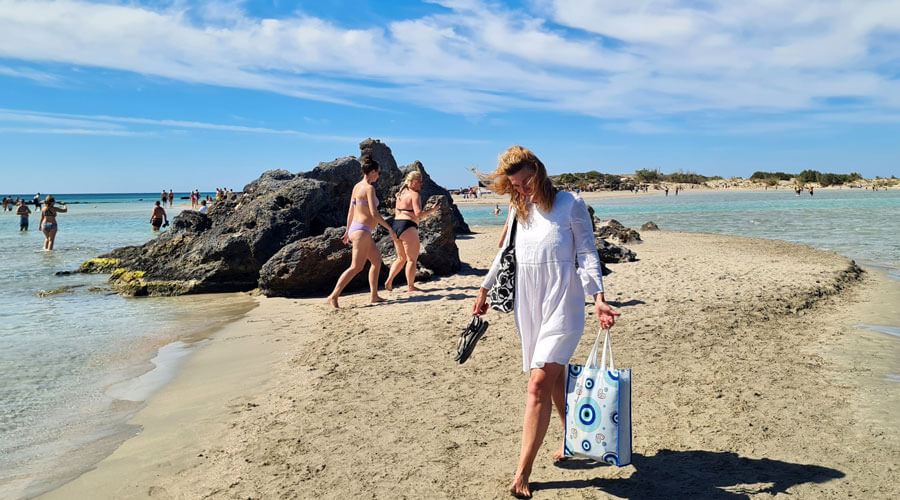
The first thing you will notice when you reach Elafonisi is the crowds on the main beach. (Try to arrive earlier in the day, as more people tend to turn up from around midday. Sun loungers are available only in the first section of the lagoon; further along, the beach is much more natural and undeveloped.) My advice is not to stay in the busiest area, but to walk through the shallows towards the little sandy islet and continue to the sandbars and the other side of the lagoon. The farther you get from the main entrance, the easier it is to find a quieter stretch of shore and a place of your own. The colours are extraordinary: the sea shifts from almost transparent pale blue to turquoise, before deepening into more intense shades of blue. In some places, the sand has a delicate pink tint; elsewhere, it resembles a desert landscape, especially where the sandbars stretch towards the horizon. I was particularly taken by the colour of the water beneath the surface. Once you dive in, you are surrounded by an intense, crystal-clear blue that is difficult to find just anywhere.
Of course, I could not resist, so I went for several swims before walking from one beach to the little sandy island and continuing along the other side of the shore. As for parking, expect to pay a few euros for the day. During my visit, the price ranged from €3 to €5, depending on the car park. One practical tip: you do not necessarily have to stop at the first car park you are directed to. A member of staff told me that cars were not allowed on the beach, which is, of course, true in the sense that the protected natural area can only be reached on foot. However, there are designated parking areas closer to the shore, so you can continue as far as permitted instead of carrying all your beach gear over a longer distance. Near the lower car park, you will find a shop, toilets, a souvenir shop and a café, which is useful if you plan to spend most of the day at the beach.
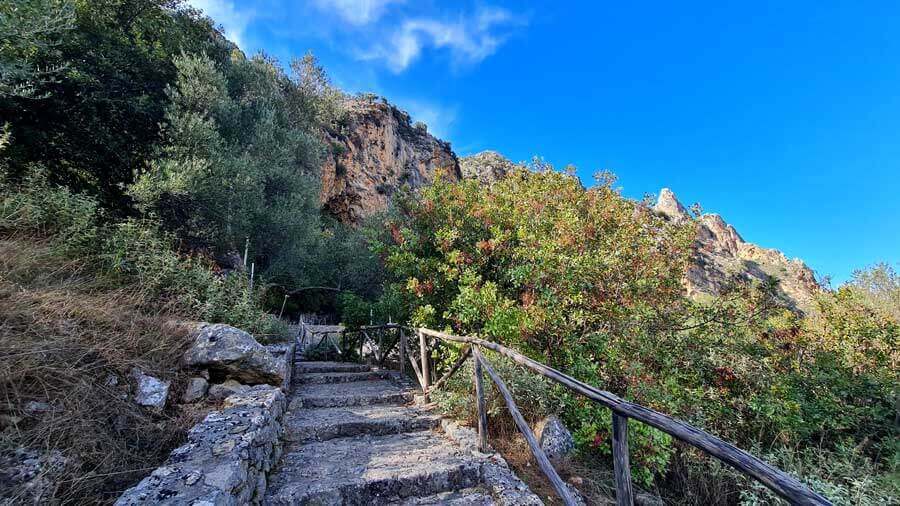
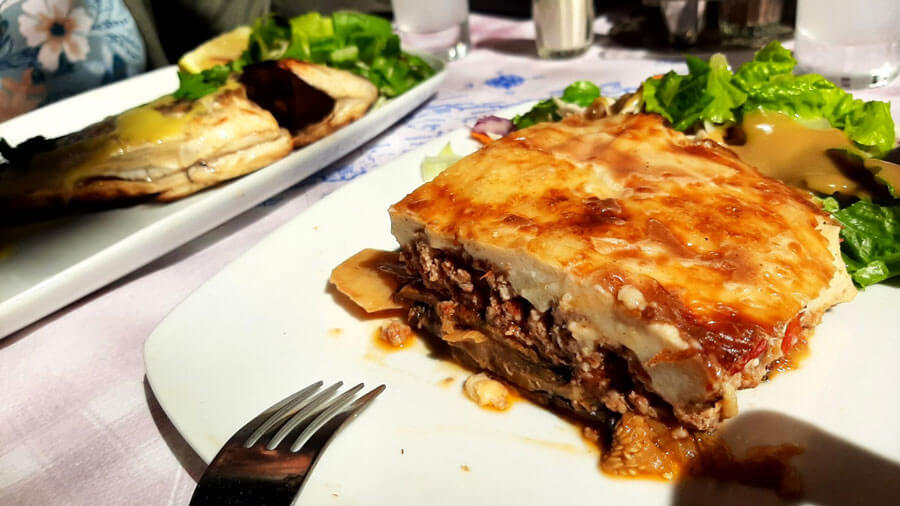
On your way to Elafonisi, make sure to stop at Agia Sofia Cave, above Topolia Gorge and not far from the village of the same name. This is a large cave with impressive stalactites and stalagmites, and a small chapel dedicated to Saint Sophia inside. The cave is also archaeologically significant, as finds suggest that it was used as far back as prehistoric times. In later centuries, it became a place of religious devotion. Local tradition tells of an icon of Saint Sophia that found its way into the cave after the fall of Constantinople. Steps lead up to the entrance, and once you reach the top, you are rewarded with wonderful views of the surrounding gorge and mountains. There is a restaurant just below the cave where you can stop for lunch or coffee while enjoying the view of the steep cliffs and the greenery of Topolia. We had an excellent moussaka and souvlaki here, so I would certainly recommend this stop as much more than a quick break on the way to one of Crete’s most beautiful beaches.
Falasarna: Ancient History and Beaches
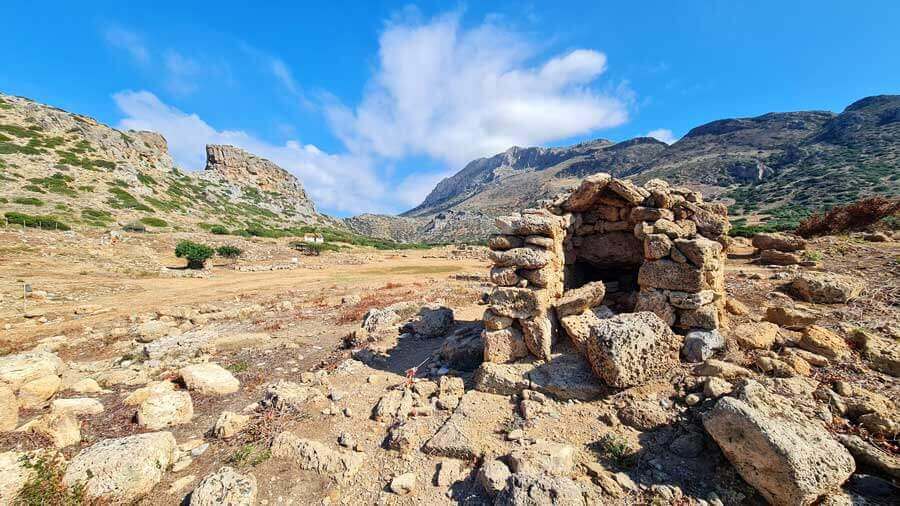
Falasarna lies on Crete’s western coast, about 60 kilometres from Chania, on the Gramvousa Peninsula. Along with its long sandy beaches and open sea, it is known for the remains of the ancient city of the same name, once one of the most important trading and maritime centres in western Crete. Falasarna reached its height during the 4th and 3rd centuries BC, when it had an important harbour, defensive walls, public buildings and a thriving maritime trade. Archaeological excavations have uncovered the remains of the ancient harbour, fortifications, towers, storerooms, baths and stone water cisterns. One particularly interesting feature is a large stone throne carved into the rock. The city was destroyed during Roman times, and its remains offer a fascinating glimpse into Crete’s history before the island became a Roman province. The beaches of Falasarna follow one another along the coast, offering different swimming conditions, from a large organised sandy stretch to smaller, quieter coves.
I first arrived in Falasarna on a Thursday, unaware that the archaeological site was closed that day, so I had to leave exploring the ancient city for another time. I did not, however, give up on discovering this part of the coast. Instead, I drove along the three beaches I had wanted to see. The best known is Big Beach, or Pachia Ammos, a long sandy stretch with organised facilities, sun loungers, umbrellas and places to grab a drink or a bite to eat. Right next to it is Small Beach, with smaller coves and a slightly different feel, while Baby Beach is the smallest and most intimate, ideal for those who prefer a quieter spot to a large, open stretch of sand. The differences are not just a matter of size: the shoreline and the shallows vary, too, so it is worth taking a look at all three before deciding where to settle.
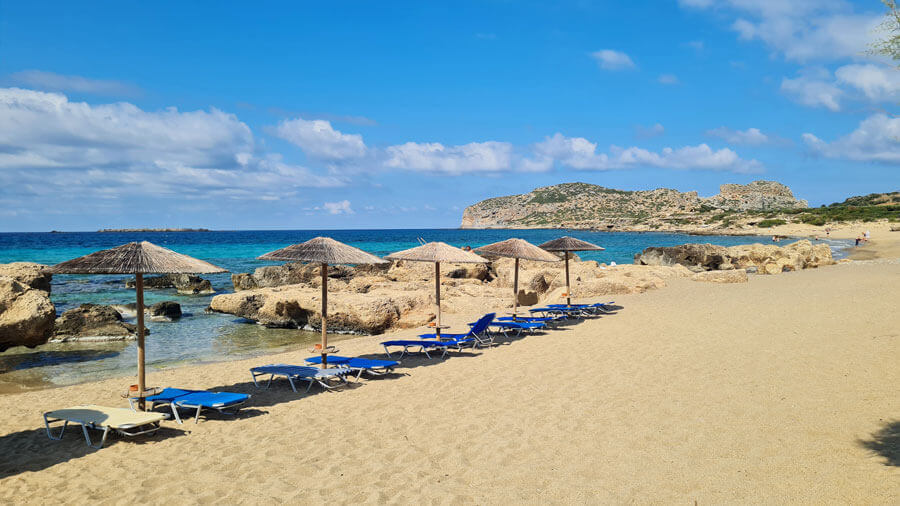
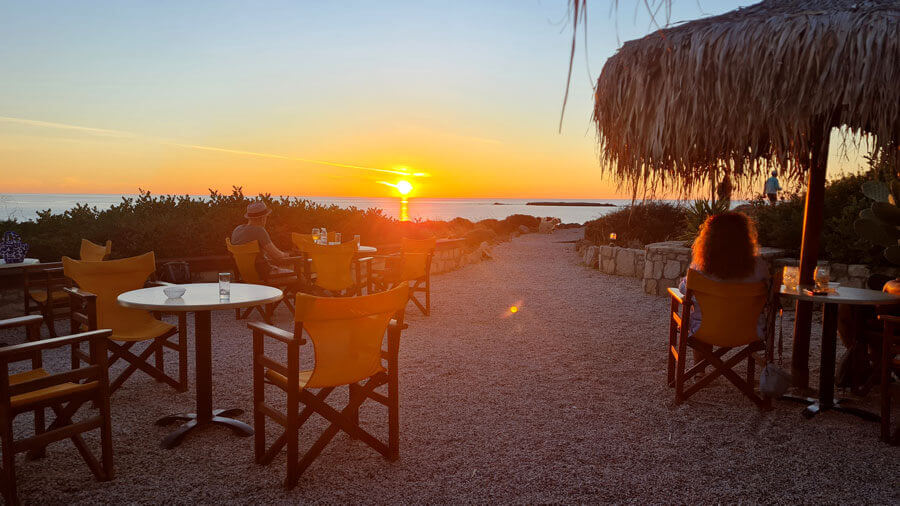
In the end, I chose the little Baby Beach. There are a few stones in the shallows, but the water was exceptionally clear and transparent. I liked the smaller setting and the fact that it was easy to find a peaceful spot for a swim, without the crowds and noise. If you plan to visit Falasarna, my advice is not to head straight for the biggest beach. Take a little time to explore the coast first and choose the stretch that suits you best. Sun loungers are available for a fee, with prices varying by around five euros for a set with an umbrella. Even at Baby Beach, you will find a changing cabin and a shower. From here, a set of stone steps leads up to a café known for its cheerful waiters and good cocktails. Falasarna is also the place to enjoy one of the most beautiful sunsets in Crete. You can watch the sun appear to rest on the edge of the sea for a few moments before slowly sinking below the horizon, leaving a delicate pink line between the water and the sky.
Kolymbari: A Change of Pace
Kolymbari is a seaside town on Crete’s north-western coast, about 25 kilometres west of Chania, known for its long shoreline, seafood restaurants and laid-back atmosphere. Although it is not among the island’s best-known tourist centres, it makes an excellent base for exploring the Rodopou Peninsula, the village of the same name and nearby historic landmarks. The most important attraction in the area is the Monastery of Panagia Odigitria Gonia, better known as Gonia Monastery, one of the most significant Orthodox monasteries in western Crete. Its history dates back to the Venetian period, and the complex is known for its fortified architecture and valuable collection of post-Byzantine icons and ecclesiastical objects. Above Kolymbari lies the village of Rodopou, which gave its name to the entire peninsula and is home to an interesting 16th-century Venetian villa. This part of the island is also worth exploring for its small villages, olive groves, vineyards and wild landscapes. Nearby, on the neighbouring Gramvousa Peninsula, lies Balos, one of Crete’s most famous natural attractions.
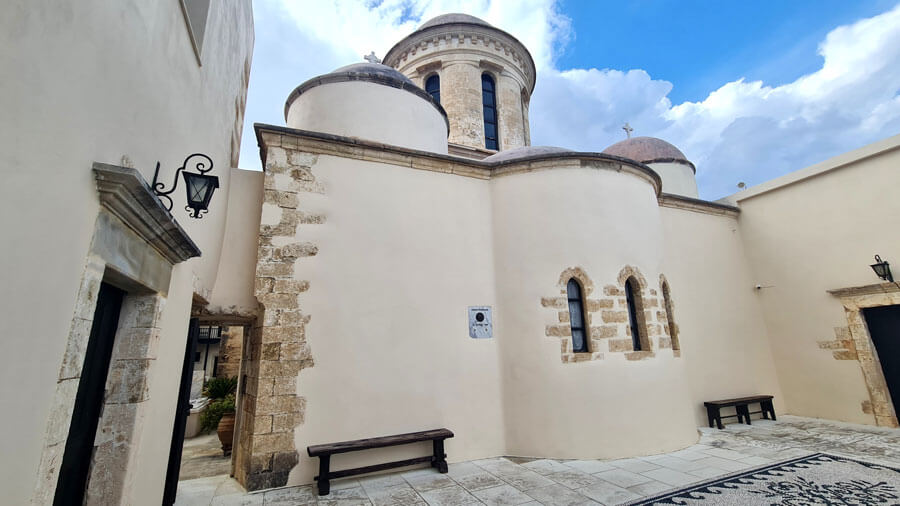
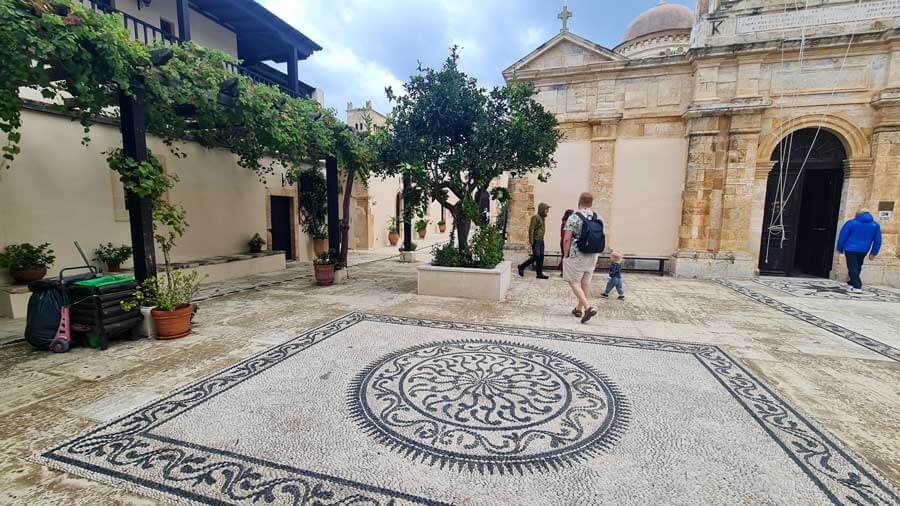
Kolymbari may not often appear on lists of Things to Do in Crete, but for me it was an excellent place to take two very different breaks from sightseeing. On my first visit, I escaped the occasional drizzle around Chania and took the opportunity to explore Gonia Monastery. It was built between 1618 and 1637, during the Venetian period, and is dedicated to the Virgin Mary as Panagia Odigitria, or Our Lady of the Way, whose iconographic representation shows her pointing towards Christ. According to the monastery’s tradition, the Virgin Mary guided a monk named Vlasios to the site where he should build the new monastery. The complex played an important spiritual and historical role over the centuries, and valuable icons and manuscripts were kept here, some of which were moved to safety during Ottoman attacks. Today, the monastery museum displays icons dating from the 15th, 16th and 17th centuries, along with ecclesiastical objects and manuscripts. Take a closer look at the details in the courtyard, the stonework and the floor mosaic, as well as the icons of the Virgin Mary, which hold a special place in the monastery’s spiritual life. Some are venerated locally as miraculous.
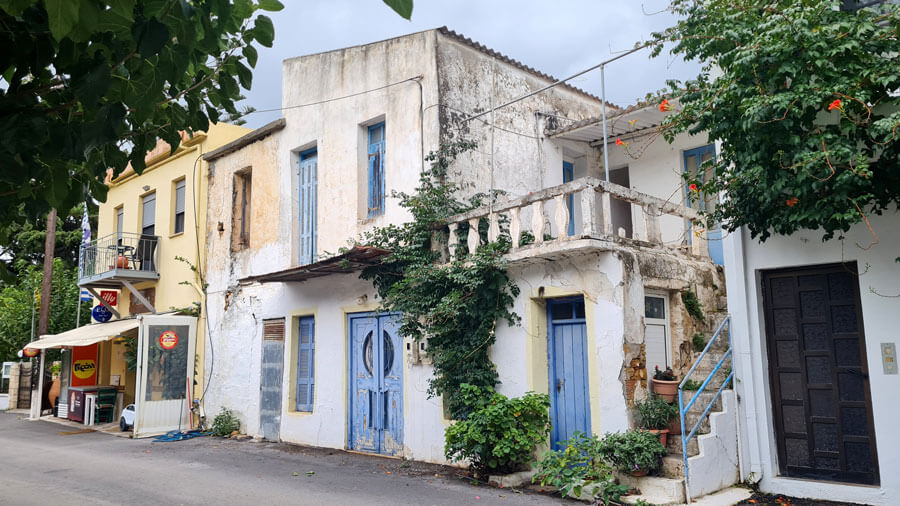
After visiting the monastery, I drove to the village of Rodopou, on the peninsula of the same name, to see an old 16th-century Venetian villa. It is an interesting reminder of the time when Venetian families on Crete built country estates and impressive residences beyond the city walls. Today, the villa is the subject of restoration efforts aimed at preserving its architectural and historical value. What you can see is its enclosed façade, surrounded by vines and greenery. After a walk through the village, I returned to Kolymbari, found a place for coffee and watched the sea, which was rather rough that day. The waves looked almost wild, and it was fascinating to see such a different side of Crete’s north-western coast, with gentle music playing in the background.
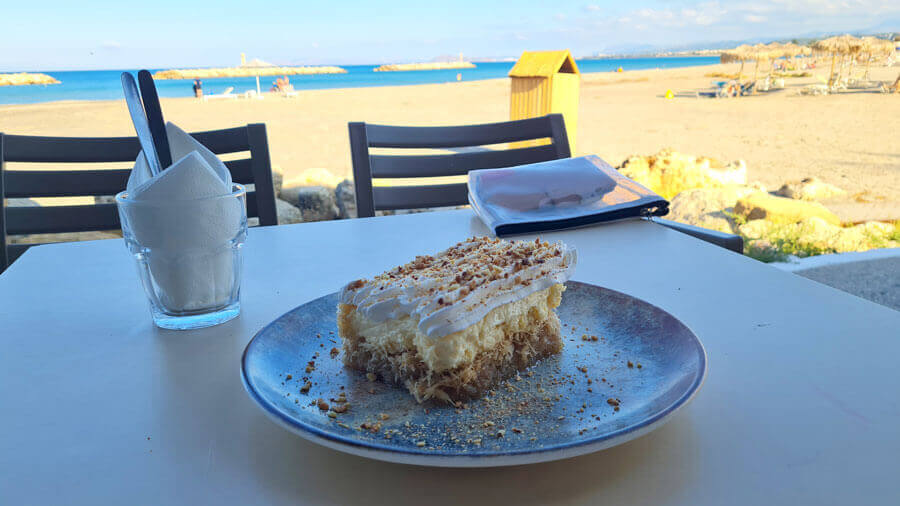
A few days later, I returned to Kolymbari for an entirely different reason: this time, I wanted to escape the wind and waves in Falasarna. While the sea at the far western end of the island was restless, I found a peaceful stretch of coast here and enjoyed another swim. Then came one more reason to linger: a generous portion of kataifi pastry at Mylos restaurant, so large that two people could easily share it over coffee. If you enjoy traditional Middle Eastern-inspired desserts, this is a lovely choice, especially after a day at the beach. Kolymbari showed me just how much weather conditions can differ across Crete, even between places only ten or twenty kilometres apart. So, if you are planning your sightseeing and wondering about Things to Do in Crete, my advice is not to rely solely on the forecast for the place where you are staying. Check the wind, its direction and strength, and compare conditions on different sides of the island. Do not give up on a beach day just because the morning looks cloudy outside your hotel. More often than you might think, a short drive in either direction can lead you to an entirely different kind of day – a proper taste of summer, even in October.
You may be wondering why I have not included Balos among the places I visited. This famous beach lies in north-western Crete, on the Gramvousa Peninsula, which runs parallel to Rodopou. It is undoubtedly a spectacular lagoon, with shallow turquoise water, white sand and occasional pink hues. You can reach it by boat from the port of Kissamos or by taking a more challenging road part of the way and then continuing on foot for a fairly long walk. During my stay in Crete in October, organised boat trips were not running because of rough seas and high waves, so I had to leave Balos for another visit. There is always next time – after all, Crete is far too large to explore in a single trip.
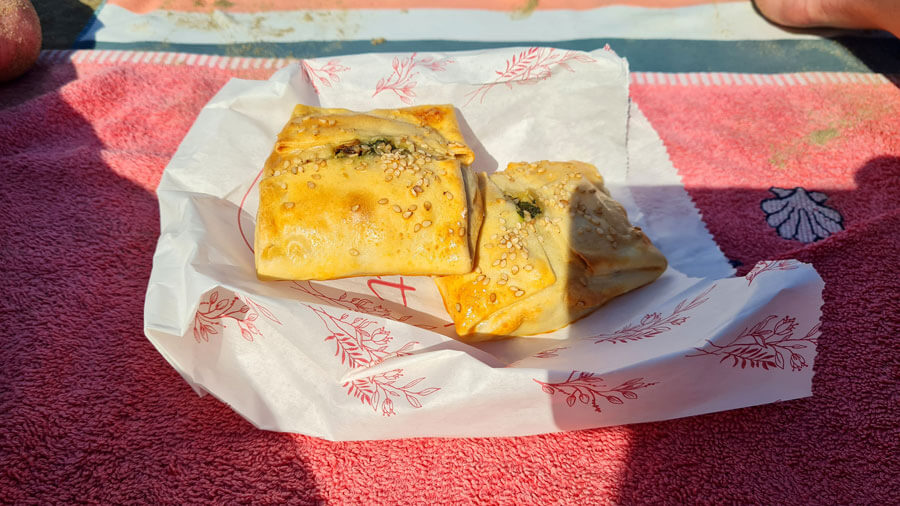
Cretan cuisine is one of the loveliest reasons to spend a little longer on the island. Start with the local pies, which come in both savoury and sweet versions. Kalitsounia are small pastries made with thin dough, usually filled with soft mizithra or another local cheese. The sweet versions are drizzled with honey, while savoury ones are often flavoured with herbs, particularly mint. Then there is sfakianopita, a thin, round cheese pie traditionally served with honey. You can buy these little pies in bakeries, find them in supermarket displays or order them as a starter in certain restaurants. They are especially worth seeking out in tavernas in the island’s interior, where they are often prepared according to local recipes. (I even took a few with me to the beach on several occasions.)
As for the cheeses Crete is known for, mizithra is a soft, fresh cheese made from sheep’s or goat’s milk. It is used in pie fillings and desserts, while graviera and other local cheeses are often served as starters. Mizithra is particularly interesting because it appears in both savoury dishes and sweet treats, so you will come across it in all sorts of combinations. Be sure to try dakos, too – a traditional dish made with barley rusks, tomatoes, olive oil and crumbled cheese, usually mizithra or feta. Do not miss antikristo, a traditional way of roasting lamb over an open fire, especially associated with the island’s mountainous villages. At the end of a meal, you will often be offered a small glass of raki. This strong grape-pomace spirit is part of local hospitality and is commonly served as a welcome drink or with the bill. Naturally, there are also Greek classics you should not leave without trying: Greek salad with ripe tomatoes and feta, souvlaki, moussaka, fresh fish and seafood. You can enjoy all of these in a variety of settings – in tavernas by the beach, small restaurants in the mountains or simple family-run places along the main roads.
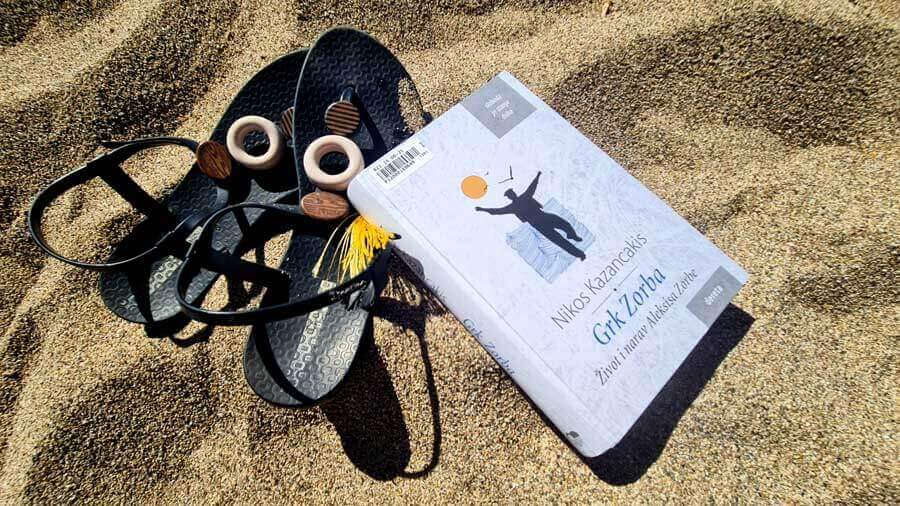
I should also mention that I brought the novel Zorba the Greek with me to Crete. I love reading books connected with the places I visit, and this one seemed particularly fitting. Its author, Nikos Kazantzakis, was born on Crete in 1883 and published the novel in 1946. The story follows a young narrator who arrives on the island to start a lignite mining venture and meets the extraordinary, larger-than-life Alexis Zorba. Through their friendship and conversations, Crete becomes much more than a backdrop: its landscapes, people and way of life are woven into the story. The novel was later adapted into the famous film, which was also made on Crete. The celebrated final beach dance scene was filmed in Stavros Bay, which I mentioned earlier in this article.
And so, with a good book, conversations with locals, wonderful scenery, the occasional glass of raki or ouzo and plenty of delicious food, you get to experience the island, little by little.
If you are planning to explore north-western Crete, Chania is an excellent base for anyone who wants to stay in the city, close to restaurants, shops and evening entertainment. For a classic beach holiday, with plenty of hotels, tavernas and facilities, consider Agia Marina and Platanias. Kolymbari and Kissamos are quieter alternatives and convenient for exploring the western part of the island, although neither town is particularly remarkable in itself. (You can check accommodation options below through Agoda, which is sometimes cheaper than Booking.com.)
I particularly liked staying in Kato Daratso, a residential area just a few kilometres from Chania. The sandy beaches of Glaros and Iguana are nearby, and the location is very convenient for day trips to Akrotiri, Rethymno, Elafonisi, Falasarna and the other places I have described. It allowed me to combine beach time with daily sightseeing without having to change accommodation during my stay. As for car rentals, browse the link below. Crete is best explored by a small car at your disposal.
The full travel series from GREECE